Automated Accruals: Achieving Accurate Period-End Close with Real-Time Data
Spreadsheet-based accruals are a relic of the past. Finance teams are discovering how automated accrual calculations using receipt data, open POs, and historical patterns can transform period-end close from a stressful marathon into a predictable verification step.
Ryan Shugars
Director of Product

According to a Deloitte CFO survey, 74% of finance leaders cite accrual accuracy as a top concern during period-end close. The reason is simple: traditional spreadsheet-based accruals rely on estimates, manual data gathering, and time-consuming reconciliation. A single missed receipt or overlooked PO can throw off financial statements by hundreds of thousands of dollars.
Yet organizations with automated accrual systems report 95%+ accuracy in their period-end estimates, with the ability to generate accrual calculations in minutes rather than days. The difference lies in leveraging real-time data from receipts, purchase orders, and historical vendor patterns instead of relying on manual estimates and email chains.
The True Cost of Spreadsheet-Based Accruals
Before diving into automation solutions, let's understand why traditional accrual processes fail organizations:
Hidden Costs of Manual Accruals
88% of spreadsheets contain errors, with financial impact averaging $10,000+ per mistake
AP teams spend 15-20 hours per close gathering data and calculating accruals manually
Manual reversals of prior-period accruals lead to duplicate entries and balance errors
Lack of documentation trail makes auditors question accrual methodology and accuracy
The irony is that the data needed for accurate accruals already exists within most organizations. Receipts are recorded in the ERP. Open POs sit in procurement systems. Invoice history reveals vendor billing patterns. The challenge is connecting these data sources into a unified, automated calculation.
Understanding GRNI: The Heart of AP Accruals
At the core of AP accrual automation is the concept of GRNI—Goods Received Not Invoiced. This represents materials or services that have been received and recorded but for which no invoice has yet arrived. Properly tracking GRNI is essential for accurate financial statements.
In a manual environment, calculating GRNI requires:
- Reviewing all open purchase orders
- Cross-referencing against goods receipt documents
- Checking for matching invoices in AP
- Calculating the value of received but uninvoiced items
- Applying appropriate GL coding for the accrual entry
This process can take days for organizations with thousands of open POs. And because it relies on point-in-time data extraction, any receipts processed after the data pull are missed entirely.
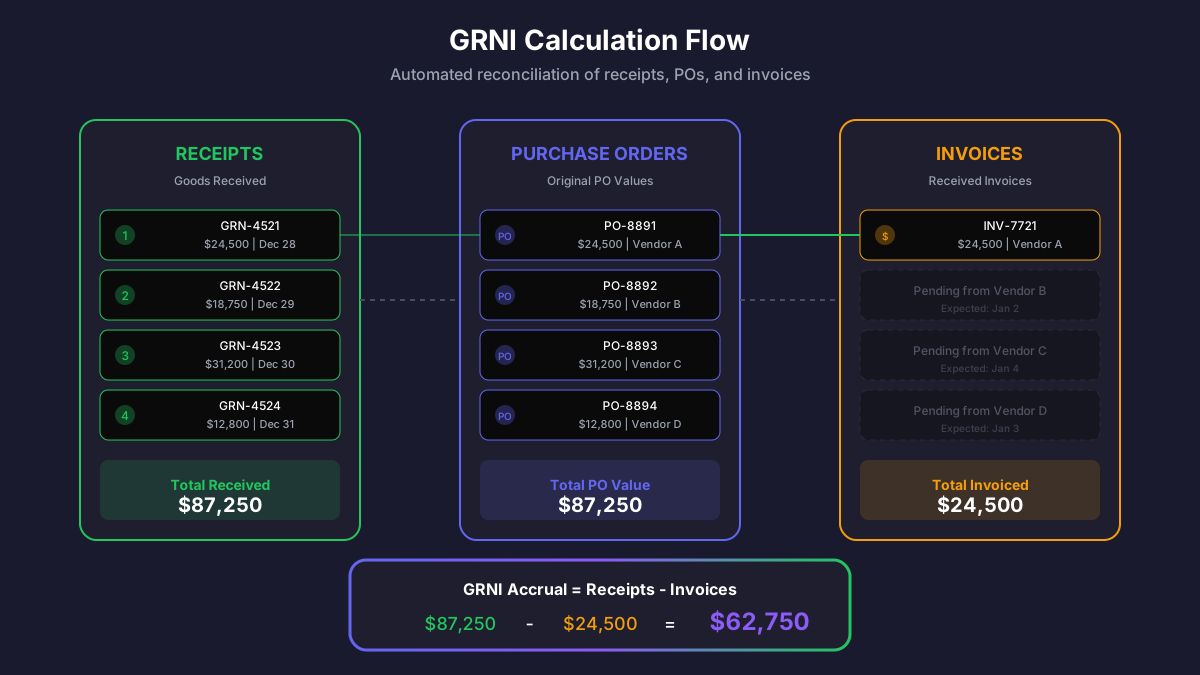
Automated GRNI tracking continuously reconciles receipts against invoices for real-time accuracy
Four Pillars of Automated Accrual Accuracy
1. Receipt-Based Accrual Calculations
The most accurate source of accrual data is actual receipt transactions. When goods arrive at the dock or services are confirmed complete, a receipt record is created. Automated systems capture these receipts in real-time and immediately calculate the corresponding liability.
Real-Time Receipt Integration
Modern AP automation systems integrate directly with warehouse management and receiving systems. The moment a receipt is recorded, the accrual calculation updates automatically—no manual data gathering required.
2. Open PO Analysis
Beyond receipts, automated systems analyze open purchase orders to identify expected deliveries. By comparing PO dates, delivery schedules, and vendor lead times, the system can predict which goods are likely to have arrived but not yet been formally received.
This predictive capability is particularly valuable for:
- Service POs: Where physical receipt may not occur
- Consignment inventory: Where goods arrive before formal acceptance
- Drop shipments: Where goods go directly to end customers
- Recurring subscriptions: Where services accrue throughout the period
3. Historical Pattern Recognition
AI-powered accrual systems learn from historical data to improve accuracy. They identify patterns such as:
- Vendors who consistently invoice 5-7 days after delivery
- Seasonal variations in invoice timing
- Categories where invoices typically lag receipts by weeks
- Specific vendors with known billing delays
These patterns inform predictive accruals, allowing the system to estimate likely liabilities even when formal receipt data is incomplete.
4. Automatic Reversal and True-Up
One of the most error-prone aspects of manual accruals is the reversal process. Last month's accruals must be reversed when actual invoices arrive, but manual tracking often leads to missed reversals or duplicate entries.
Automated systems handle this seamlessly:
- Prior period accruals reverse automatically at period start
- When invoices match to accrued receipts, the system validates the accrual
- Variances between accrual and actual are tracked and analyzed
- GL entries are generated automatically with full audit trail
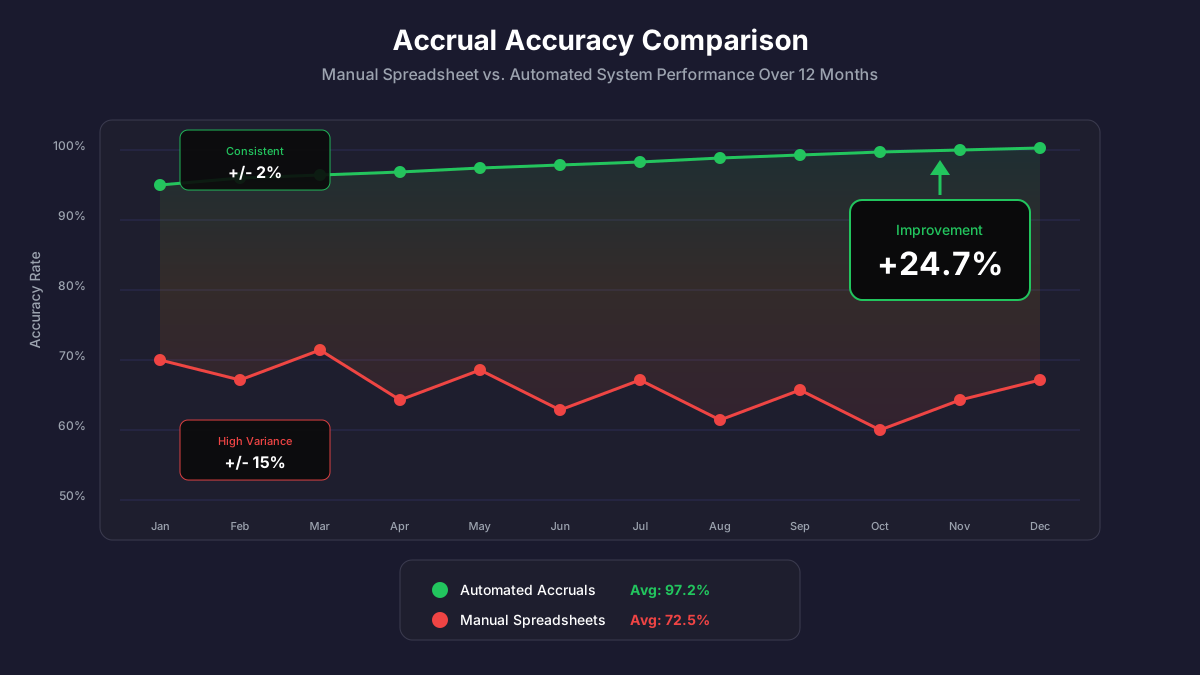
Automated accruals achieve 95%+ accuracy compared to 70-80% with manual processes
Implementation: From Spreadsheets to Automation
Transitioning from spreadsheet-based accruals to an automated system requires careful planning. Here's a proven implementation approach:
Implementation Roadmap
Data Source Integration (Week 1-2)
Connect ERP receipt and PO data feeds to the automation platform. Validate data quality and establish reconciliation baselines.
Accrual Rules Configuration (Week 2-3)
Define GL account mappings, materiality thresholds, and vendor-specific rules. Configure receipt matching tolerances.
Parallel Run (Week 3-4)
Run automated accruals alongside manual process for one close cycle. Analyze variances and refine rules.
Go-Live and Optimization (Week 5+)
Transition to automated accruals as primary method. Monitor accuracy metrics and continuously improve pattern recognition.
Measuring Accrual Performance
Effective accrual automation requires ongoing measurement. Track these key metrics to ensure your automated accruals are delivering value:
Accrual Accuracy Metrics
Accrual-to-Actual Variance
Difference between accrued amount and actual invoice
Target: Less than 2%
Accrual Completion Time
Time from period end to accrual entries posted
Target: Less than 4 hours
GRNI Coverage Rate
Percentage of GRNI items automatically identified
Target: Greater than 98%
Reversal Accuracy
Accruals correctly reversed in subsequent period
Target: 100%
Advanced Capabilities: Predictive Accruals
Leading organizations are moving beyond receipt-based accruals to predictive models that anticipate liabilities before goods even arrive. These AI-powered systems analyze:
- Vendor shipping data: Tracking numbers indicate goods in transit
- Production schedules: Manufacturing milestones trigger partial accruals
- Contract milestones: Project phases tied to payment obligations
- Usage patterns: Consumption-based services accrued by utilization
The Future: Continuous Close
With real-time accrual automation, the traditional month-end close becomes obsolete. Organizations can access accurate financial positions at any moment, enabling faster decision-making and reduced close cycles.
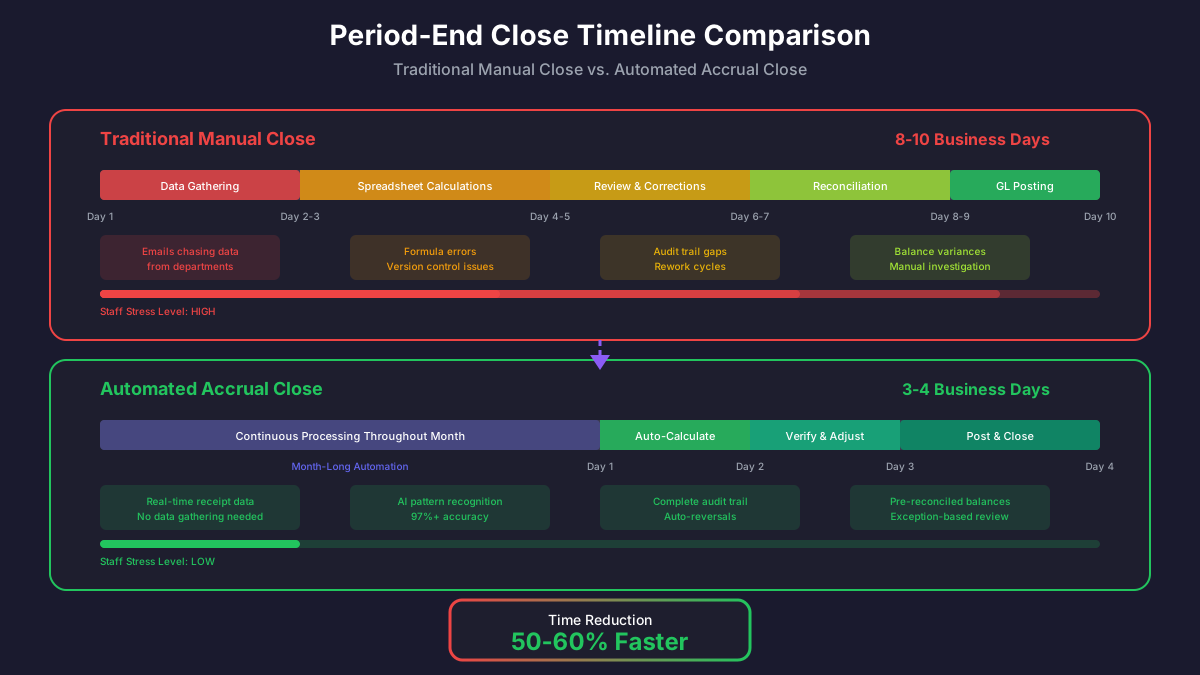
Automated accruals can reduce close timelines by 50% or more
Common Challenges and Solutions
Organizations transitioning to automated accruals often encounter these challenges:
Challenge Resolution Guide
Incomplete receipt data
Solution: Implement receiving compliance monitoring and require timely receipt entry as part of vendor management SLAs.
Non-PO invoices
Solution: Use historical patterns and vendor analysis to estimate accruals for recurring non-PO spend categories.
Multi-currency complexity
Solution: Configure automatic currency translation using period-end rates with proper foreign exchange variance tracking.
The Strategic Value of Accurate Accruals
Beyond operational efficiency, accurate automated accruals deliver strategic benefits to the organization:
- Better cash forecasting: Real-time liability visibility improves treasury planning
- Audit confidence: Complete documentation trail satisfies auditor requirements
- Faster decisions: Leadership accesses accurate financials without waiting for close
- Reduced restatement risk: Higher accuracy means fewer material misstatements
- Staff reallocation: AP teams focus on analysis instead of data gathering
Getting Started with Accrual Automation
The path to automated accruals begins with understanding your current state. Assess your existing data sources, identify gaps in receipt tracking, and document your current accrual methodology. This baseline enables you to measure improvement and prioritize automation investments.
Organizations that successfully automate accruals typically see ROI within the first quarter through reduced close time, improved accuracy, and freed staff capacity. The technology exists today—the question is whether your organization is ready to leave spreadsheet-based accruals behind.
The most successful transformations start small, perhaps with a single high-volume category or business unit, then expand based on proven results. This approach builds confidence and allows teams to develop expertise before full-scale deployment.
Ryan Shugars
Director of Product
Ryan has spent 15 years as a Systems Architect, building enterprise solutions that transform how organizations manage their financial operations.