Building an AP Center of Excellence: Training and Development Strategies
The most successful AP departments are not just processing centers. They are strategic hubs where skilled professionals drive vendor value, optimize cash flow, and contribute insights that shape organizational strategy. Building such a team requires intentional investment in training and development.
Ryan Shugars
Director of Product

Accounts payable has transformed from a back-office function into a strategic discipline requiring diverse skills across technology, analytics, vendor management, and financial strategy. Yet many organizations still approach AP staffing with a transaction-first mindset, hiring for data entry skills while hoping strategic capabilities emerge organically. They rarely do.
Building an AP Center of Excellence requires a deliberate, structured approach to team development. It means identifying the competencies that matter, creating pathways for skill acquisition, and measuring progress against meaningful outcomes. Organizations that make this investment see remarkable returns: higher retention, better performance, and AP teams that contribute genuine strategic value.
The Modern AP Professional: A New Role Definition
The traditional AP clerk role, focused on invoice keying and payment processing, is rapidly becoming obsolete. Automation handles routine transactions with greater speed and accuracy than humans ever could. But this does not mean AP professionals are less valuable. Rather, it means their value must come from capabilities that machines cannot replicate.
Today's high-performing AP professional is part analyst, part relationship manager, part process optimizer, and part technology specialist. They understand not just how to process an invoice, but why payment timing matters, how vendor relationships affect organizational outcomes, and what spending patterns reveal about business operations.
The Four Pillars of AP Excellence
Analytics & Insights
Data interpretation, trend analysis, KPI management, reporting, and business intelligence application.
Vendor Management
Relationship building, negotiation, performance monitoring, issue resolution, and strategic partnership development.
Strategic Finance
Cash flow optimization, working capital management, early payment strategy, and financial planning support.
Technology & Systems
ERP proficiency, automation platform expertise, workflow optimization, and continuous improvement.
Organizations that recognize and develop these competencies create AP teams that command respect across the organization. Rather than being viewed as a necessary but undifferentiated function, the AP department becomes a sought-after partner for procurement, treasury, and business operations.

Career progression through four levels of AP expertise
Designing a Comprehensive Training Program
Effective AP training goes far beyond teaching system navigation or process steps. It builds fundamental capabilities that enable professionals to add value in changing circumstances. A comprehensive program addresses technical skills, business knowledge, soft skills, and leadership development.
Technical Skills Development
Every AP professional needs solid technical foundations. This starts with deep proficiency in your core systems, whether SAP, Oracle, NetSuite, or other ERP platforms. But it extends to automation tools, reporting systems, and analytics platforms that have become essential to modern AP operations.
Training should progress from basic navigation to advanced capabilities. An entry-level professional might learn standard invoice entry and query functions. As they advance, they should master exception handling, workflow configuration, and reporting capabilities. Senior professionals should be capable of system optimization, integration troubleshooting, and training others.
Business Acumen Building
AP professionals who understand the broader business context make better decisions at every level. This means teaching not just what to do, but why it matters. When team members understand how payment timing affects cash flow, how vendor relationships influence supply chain reliability, and how spending patterns reflect operational health, they bring strategic thinking to routine activities.
Include exposure to adjacent functions: procurement strategy, treasury operations, internal audit requirements, and financial planning processes. Cross-functional training helps AP professionals understand how their work connects to organizational success and prepares them for roles that span traditional boundaries.
The 70-20-10 Development Model for AP
Research shows that effective professional development follows a 70-20-10 pattern:
Soft Skills and Leadership
Technical excellence alone does not create AP leaders. The ability to communicate effectively, negotiate with vendors, collaborate across departments, and manage change are equally essential. These capabilities often receive insufficient attention in AP training programs, yet they frequently determine who advances to leadership roles.
Include training on conflict resolution (essential for vendor disputes and internal disagreements), presentation skills (for sharing insights with leadership), and influence without authority (critical when working with approvers and business partners who do not report to AP leadership).
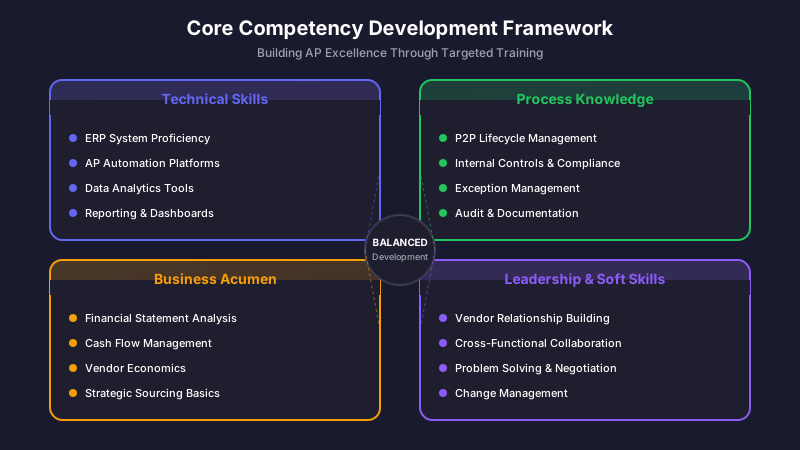
A balanced approach to competency development across four key domains
Creating Career Pathways That Retain Talent
One of the greatest challenges in AP management is retention. Skilled professionals who feel stuck in transaction processing roles will seek opportunities elsewhere. Creating visible career pathways demonstrates that investment in skill development leads to advancement, giving ambitious team members reasons to stay and grow within your organization.
Define clear progression levels with specific competency requirements, responsibilities, and compensation ranges. A typical structure might include:
AP Specialist
Foundation skills in invoice processing, basic matching, and system navigation. Focus on accuracy and efficiency in transaction handling.
Senior AP Specialist
Advanced exception handling, vendor communication, process optimization, and mentoring of junior staff. Beginning analytical responsibilities.
AP Analyst
Spend analysis, performance reporting, vendor scorecards, and cash flow forecasting. Cross-functional collaboration and strategic project involvement.
AP Manager / Lead
Team leadership, policy development, vendor strategy, technology roadmap, and organizational representation. Strategic planning and executive communication.
Importantly, career development should not require leaving AP entirely. Create senior individual contributor tracks for those who excel at analysis and optimization but do not aspire to people management. This retains institutional knowledge while honoring different career aspirations.
Measuring Training Effectiveness
Training investment requires accountability. Without measurement, organizations cannot distinguish effective programs from wasted spending. Develop metrics that connect development activities to meaningful outcomes.
Start with leading indicators: training completion rates, skill assessment scores, and certification attainment. But do not stop there. Track how training translates to performance: error rate reduction, processing speed improvement, exception resolution time, and strategic work capacity.
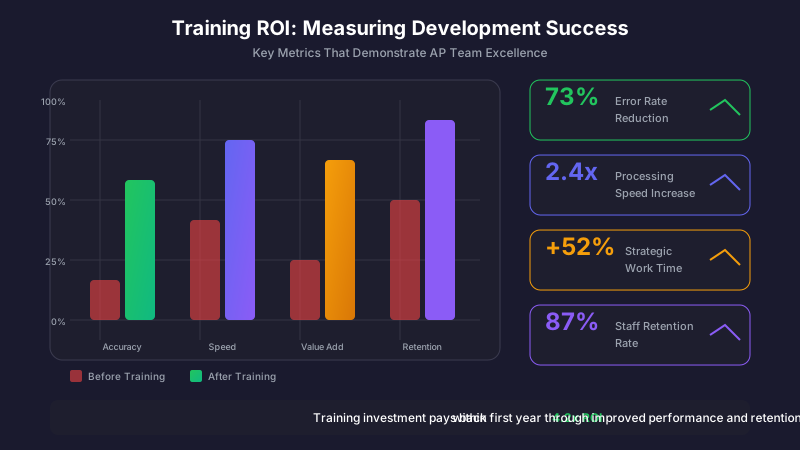
Key metrics demonstrate the tangible return on training investment
Perhaps most importantly, measure retention. Organizations that invest in development see dramatically lower turnover. When professionals see growth opportunities and feel their development is valued, they stay. Given the cost of recruiting and training replacements, often equivalent to 50-200% of annual salary, even modest retention improvements generate significant ROI.
The Hidden ROI of AP Development
Organizations with structured AP training programs report 87% retention rates compared to 65% industry average. With replacement costs averaging $45,000-$75,000 per AP professional, preventing even a few departures through better development can fund an entire training program.
Building the Center of Excellence Culture
A Center of Excellence is more than training programs and career ladders. It is a culture that values continuous improvement, celebrates expertise, and connects individual development to organizational success. Creating this culture requires leadership commitment and consistent reinforcement.
Establish Communities of Practice
Create forums where AP professionals share knowledge, discuss challenges, and learn from each other. Regular team meetings should include time for knowledge sharing, whether highlighting a creative problem solution, walking through a complex vendor issue, or demonstrating a new system capability.
Consider formal communities of practice around specific domains: vendor management excellence, automation optimization, analytics and reporting, or compliance and controls. These groups foster deep expertise while creating connection across organizational boundaries.
Celebrate and Recognize Excellence
Recognition reinforces valued behaviors. Acknowledge team members who achieve certifications, complete development programs, or demonstrate exceptional performance. Highlight contributions to strategic initiatives, not just transaction volume.
Connect recognition to business outcomes: the analyst who identified a spending consolidation opportunity, the specialist who resolved a complex vendor dispute, the team that improved discount capture rates. This demonstrates that strategic contribution is valued and observed.
Enable Cross-Functional Exposure
AP professionals develop faster when they understand how their work connects to adjacent functions. Create opportunities for cross-functional projects, job shadowing, and collaborative initiatives. When AP team members participate in procurement negotiations, treasury planning, or audit preparation, they develop broader perspectives that enhance their core work.
Implementing Your Development Strategy
Building an AP Center of Excellence requires sustained effort, not a one-time initiative. Start with an honest assessment of current capabilities, identify the most critical gaps, and prioritize development investments that address those gaps.
Implementation Roadmap
Assess Current State (Weeks 1-2)
Evaluate team competencies, identify gaps, and benchmark against industry standards. Gather input from team members on development interests.
Define Career Framework (Weeks 3-4)
Establish career levels, competency requirements, and progression criteria. Communicate pathways to team and align with HR processes.
Launch Priority Training (Month 2)
Begin with highest-impact development areas. Focus on quick wins that demonstrate value while building momentum for broader initiatives.
Establish Measurement (Month 3)
Implement tracking for development activities and outcomes. Create dashboards that connect training to performance metrics.
Build Community (Ongoing)
Foster knowledge sharing, establish mentoring relationships, and create forums for continuous learning and collaboration.
The Technology Connection
Modern AP automation, including AI-native platforms like Remmi, actually accelerates the development of AP professionals rather than replacing them. When routine transactions process automatically, team members have capacity to develop analytical and strategic capabilities. They work with technology rather than being replaced by it.
Include technology proficiency in your development framework. Professionals who understand how automation works, can optimize system configurations, and can leverage analytics capabilities add far more value than those who simply navigate interfaces. As automation advances, these skills become increasingly essential.
The Bottom Line
Investing in AP team development is not optional for organizations that want world-class payables operations. The function has evolved beyond transaction processing into a strategic discipline requiring diverse, sophisticated capabilities.
Organizations that build true AP Centers of Excellence enjoy multiple advantages: higher retention of skilled professionals, better performance on key metrics, enhanced strategic contribution, and stronger partnerships across the organization. The investment required is modest compared to the returns, both in hard savings and in strategic value creation.
The question is not whether to invest in AP development, but how quickly you can build the programs that transform your team from transaction processors into strategic partners. Every month of delay is a month where your team's potential remains unrealized and your best professionals may be looking for growth opportunities elsewhere.
AP Center of Excellence Readiness Checklist
Do you have defined career levels with clear competency requirements?
Are development opportunities visible and accessible to all team members?
Do training programs cover technical, business, and leadership skills?
Is development progress measured and connected to outcomes?
Does your culture celebrate expertise and continuous improvement?
Organizations answering no to three or more questions have significant opportunity to improve AP team development and retention through structured excellence programs.
Ryan Shugars
Director of Product
Ryan has spent 15 years as a Systems Architect, building enterprise solutions that transform how organizations manage their financial operations.