Essential AP Department KPIs: Industry Benchmarks and How to Measure Success
What separates world-class AP departments from the rest? It comes down to measurement. Organizations that track the right KPIs consistently outperform those flying blind. Here's your complete guide to the metrics that matter most.
Ryan Shugars
Director of Product
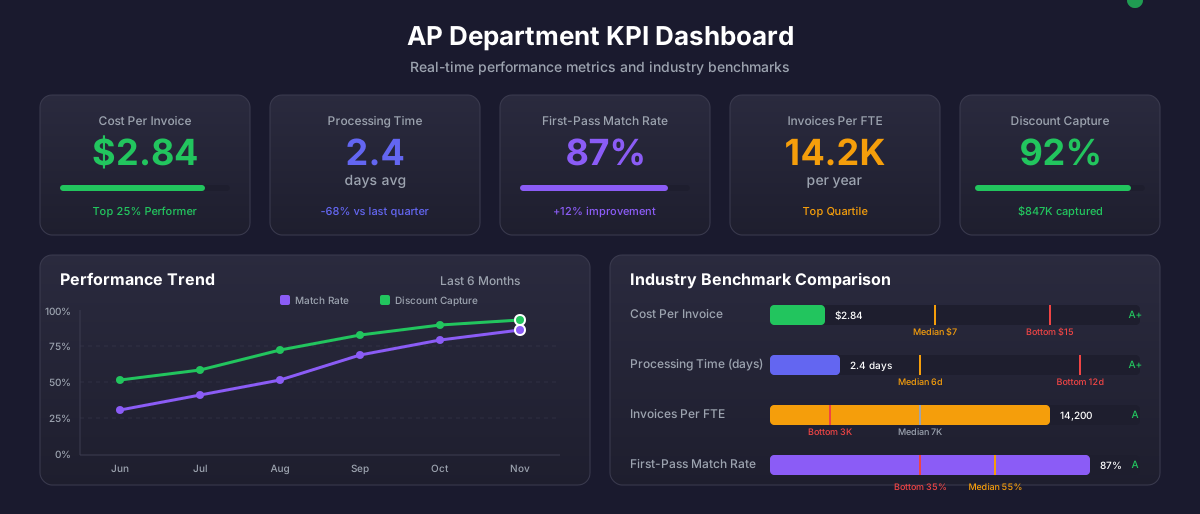
According to APQC benchmarking data, top-performing AP departments process invoices at 80% lower cost than their bottom-quartile peers. The difference isn't luck or budget—it's systematic measurement and optimization. Yet many AP teams still operate without clear visibility into their performance, leaving significant efficiency gains on the table.
Key Performance Indicators (KPIs) are more than just numbers on a dashboard. They're the foundation of continuous improvement, the language of executive communication, and the roadmap for automation investment. Whether you're building an AP function from scratch or optimizing an existing operation, understanding these metrics is essential.
Why AP KPIs Matter More Than Ever
The role of accounts payable has evolved dramatically. Once viewed as a cost center focused solely on paying bills, modern AP departments are strategic partners that influence cash flow, vendor relationships, and financial compliance. This elevation brings increased scrutiny and the need for concrete performance data.
The Business Case for AP Metrics
Higher early payment discount capture rate for organizations with KPI dashboards
Reduction in processing time when teams have visibility into performance data
Of CFOs cite AP metrics when evaluating automation investments
Average cost difference per invoice between top and bottom performers
The Core AP KPIs Every Team Should Track
While every organization has unique requirements, certain KPIs form the foundation of AP performance measurement. These metrics provide a comprehensive view of efficiency, accuracy, and financial impact.
1. Cost Per Invoice
Cost per invoice is the gold standard for measuring AP efficiency. This metric captures the fully-loaded cost of processing a single invoice, including labor, technology, overhead, and outsourcing expenses. It's the primary benchmark used by APQC, Hackett Group, and other research organizations.
Cost Per Invoice Benchmarks
To calculate your cost per invoice, sum all AP-related expenses for a period and divide by the number of invoices processed. Include salaries, benefits, technology costs, supplies, allocated overhead, and any outsourcing fees. Exclude costs for other finance functions that may share resources.
2. Invoice Processing Time
This metric measures the elapsed time from invoice receipt to payment approval. It's a direct indicator of process efficiency and has significant implications for vendor relationships and early payment discount capture.
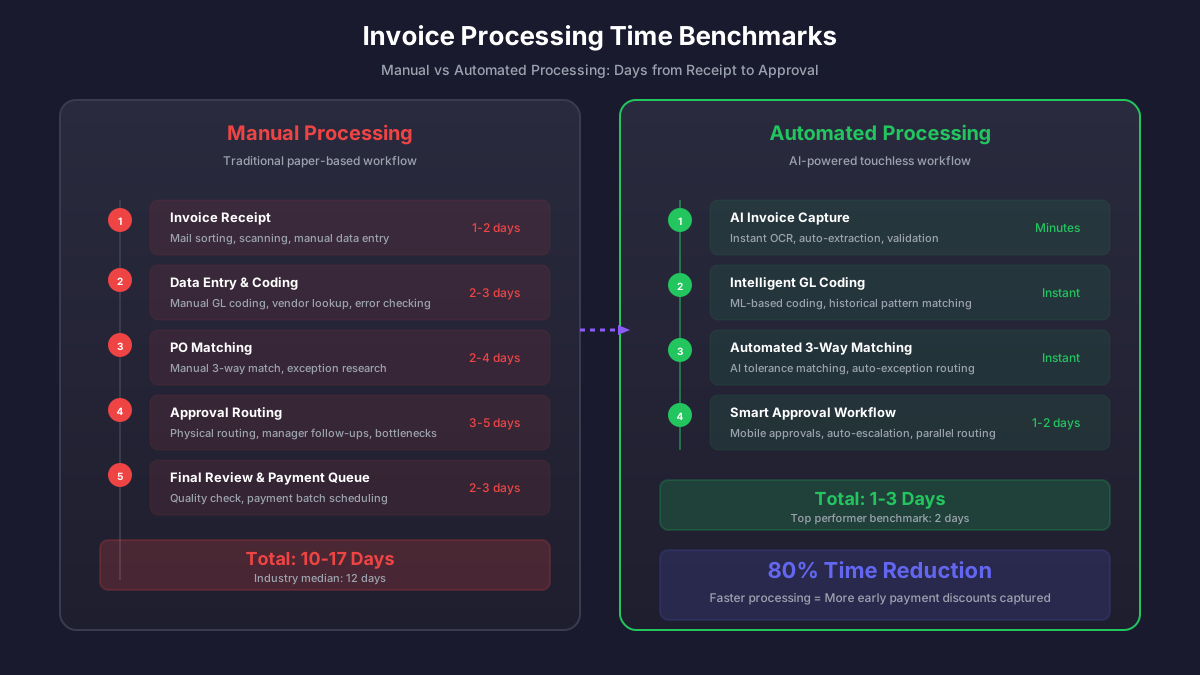
Processing time benchmarks reveal the dramatic efficiency gains possible through automation
Industry benchmarks show significant variation in processing times:
- Top performers: 2-3 days from receipt to approval
- Median: 5-7 days from receipt to approval
- Bottom quartile: 10-15+ days from receipt to approval
Note that processing time should be measured from the moment an invoice enters your system—not from the invoice date, which can vary based on vendor practices.
3. Invoices Processed Per FTE
This productivity metric indicates how efficiently your team handles invoice volume. It's particularly useful for capacity planning and staffing decisions, as well as for evaluating the impact of automation investments.
Invoices Per FTE Benchmarks
World-Class Automated
Heavy automation + AI
20,000+
invoices/FTE/year
Top Quartile
Significant automation
12,000-15,000
invoices/FTE/year
Median
Some automation
6,000-8,000
invoices/FTE/year
Bottom Quartile
Manual processes
2,500-4,000
invoices/FTE/year
4. First-Pass Match Rate
Also known as straight-through processing rate, this measures the percentage of invoices that match purchase orders and receiving documents without manual intervention. A high first-pass match rate indicates clean data, good vendor compliance, and effective automation.
- World-class: 85-95% first-pass match rate
- Top quartile: 70-85% first-pass match rate
- Median: 50-65% first-pass match rate
- Bottom quartile: Below 40% first-pass match rate
5. Exception Rate and Resolution Time
Exceptions—invoices that require manual review due to mismatches, missing data, or policy violations—are the primary driver of AP costs. Tracking both the rate of exceptions and the time to resolve them provides insight into process bottlenecks.
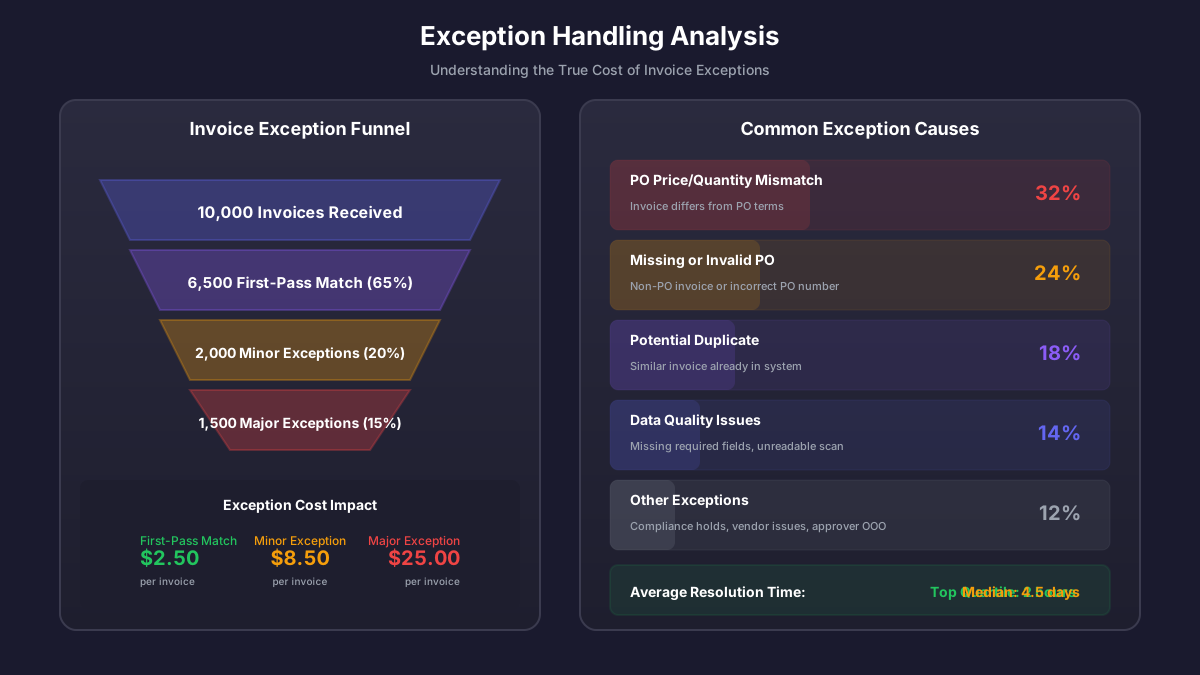
Understanding exception patterns is key to reducing manual processing costs
6. Early Payment Discount Capture Rate
This financial metric measures the percentage of available early payment discounts your organization actually captures. With typical terms of 2/10 net 30 (2% discount for payment within 10 days), the annualized return on early payment can exceed 36%.
Discount Capture Impact
For an organization processing $50M in annual payables with 30% of invoices offering early payment terms:
- • Available discounts: $300,000 (2% of $15M)
- • Top performers capture: $255,000 (85% capture rate)
- • Bottom performers capture: $45,000 (15% capture rate)
- • Annual difference: $210,000
Advanced KPIs for Mature AP Operations
Beyond the core metrics, mature AP organizations track additional KPIs that provide deeper operational insight and strategic value.
Payment Accuracy Rate
This measures the percentage of payments made without errors—correct amount, correct vendor, correct account. Duplicate payments, overpayments, and wrong-vendor payments all count against this metric. World-class organizations achieve 99.5%+ accuracy.
Touchless Processing Rate
The percentage of invoices processed without any human intervention, from receipt through payment. This is the ultimate automation metric, indicating how effectively technology handles routine transactions. Top performers achieve 40-60% touchless rates.
Vendor Inquiry Rate
The number of vendor inquiries per 1,000 invoices processed. A high inquiry rate indicates process problems—late payments, payment discrepancies, or poor communication. It's also a hidden cost, as handling vendor calls consumes significant staff time.
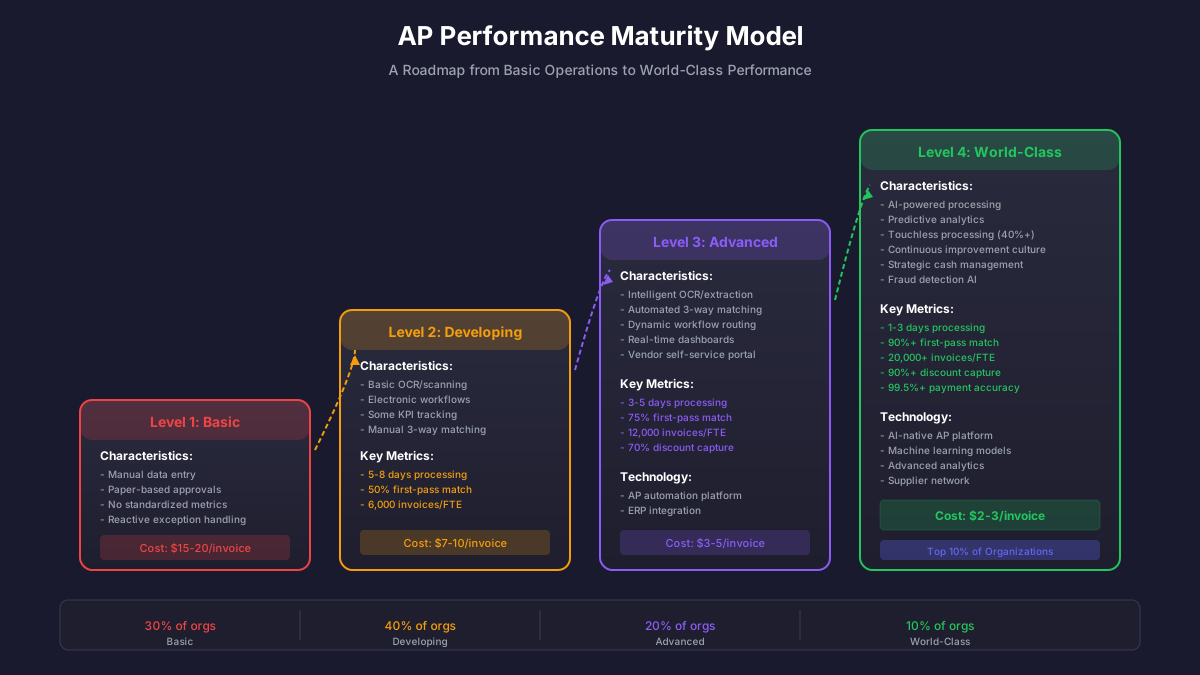
The AP maturity model provides a roadmap for continuous performance improvement
Building Your KPI Dashboard
Effective KPI tracking requires more than just collecting data. You need a systematic approach to measurement, visualization, and action. Here's how to build a dashboard that drives improvement.
Define Clear Calculation Methods
Inconsistent measurement makes benchmarking meaningless. Document exactly how each metric is calculated, what data sources are used, and what's included or excluded. This ensures consistency over time and enables accurate comparison to industry benchmarks.
Sample KPI Definitions
Cost Per Invoice
(Total AP Staff Costs + Technology Costs + Allocated Overhead) / Total Invoices Processed
Excludes: Travel expense processing, payment execution costs
Processing Time
Business days from invoice receipt timestamp to approval completion timestamp
Note: Excludes weekends and company holidays
First-Pass Match Rate
(Invoices Matched Without Exception / Total PO-Based Invoices) x 100
Excludes: Non-PO invoices, which have different processing paths
Establish Baseline and Targets
Before launching improvement initiatives, measure your current performance to establish a baseline. Then set realistic targets based on industry benchmarks and your organization's improvement capacity. Avoid setting targets that require perfection—aim for steady, measurable progress.
Create Actionable Visibility
Your dashboard should do more than display numbers—it should drive action. Include trend lines that show improvement trajectory, alerts when metrics fall outside acceptable ranges, and drill-down capability to investigate specific issues.
Common KPI Pitfalls to Avoid
- • Measuring too many things: Focus on 6-8 core metrics that drive business outcomes
- • Ignoring data quality: Garbage in, garbage out—validate your source data
- • Static targets: Review and adjust benchmarks annually as you improve
- • Vanity metrics: Track metrics that drive decisions, not just look good
- • Delayed reporting: Monthly snapshots miss opportunities for real-time correction
Using KPIs to Drive Automation Decisions
Your KPI data is invaluable for building the business case for AP automation. By quantifying current performance gaps and projecting improvement, you can demonstrate concrete ROI to leadership.
Start by identifying your highest-cost processes. If exception handling consumes significant time, look for automation that improves first-pass match rates. If processing time is your challenge, prioritize solutions that accelerate invoice capture and approval routing.
Automation Impact by KPI
Cost Per Invoice
60-80% reduction
Processing Time
75-90% faster
First-Pass Match Rate
30-50% improvement
Discount Capture
2-4x increase
Getting Started: Your 30-Day KPI Action Plan
Implementing comprehensive KPI tracking doesn't require a massive project. Here's a practical roadmap to get started:
30-Day Implementation Plan
Week 1
Define and Document
Select your core 6 metrics, document calculation methods, identify data sources
Week 2
Baseline Measurement
Collect historical data, calculate current performance, validate accuracy
Week 3
Set Targets
Research industry benchmarks, set 6-month and 12-month improvement targets
Week 4
Launch Dashboard
Build visualization, establish review cadence, communicate to stakeholders
The Bottom Line
KPIs are the foundation of world-class AP operations. They provide the visibility needed to identify improvement opportunities, the data to justify automation investments, and the accountability to maintain high performance. Organizations that commit to systematic measurement consistently outperform those that don't.
Start with the core metrics—cost per invoice, processing time, first-pass match rate, and discount capture. Build a simple dashboard and review it regularly. Then expand as your measurement maturity grows.
The gap between top-quartile and bottom-quartile AP performance is enormous. With the right KPIs in place, you have the roadmap to close that gap and transform your accounts payable function from a cost center to a strategic advantage.
Ryan Shugars
Director of Product
Ryan has spent 15 years as a Systems Architect, building enterprise solutions that transform how organizations manage their financial operations.