AP Data Analytics: Transforming Transaction Data into Strategic Insights
Your accounts payable department processes thousands of transactions every month. Hidden within that data are patterns that can transform your business strategy, vendor relationships, and bottom line. Here's how to unlock that potential.
Ryan Shugars
Director of Product
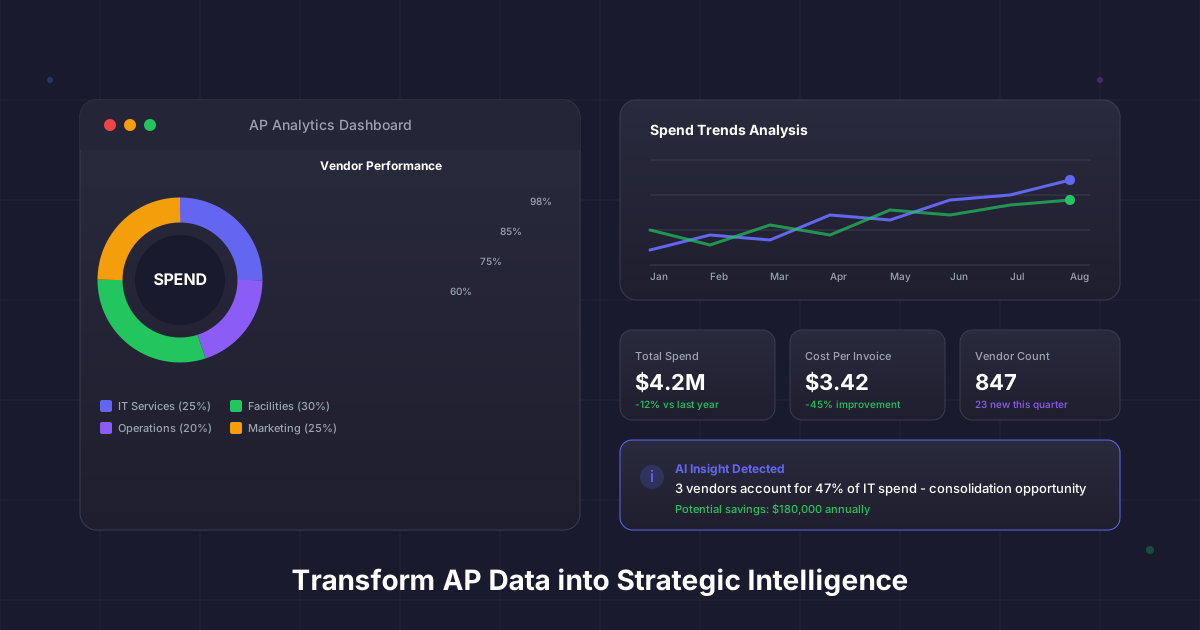
According to Deloitte, organizations that leverage data analytics in their finance operations achieve 23% higher profitability than their peers. Yet most AP departments sit on a goldmine of transaction data without ever mining it for strategic insights. The invoices, payments, and vendor interactions flowing through your AP system contain patterns that can reshape procurement strategy, optimize cash flow, and identify millions in savings opportunities.
The shift from transactional AP to strategic AP starts with data. Every invoice tells a story—about vendor reliability, pricing trends, spending patterns, and process efficiency. When you aggregate thousands of these stories and analyze them systematically, you gain visibility that transforms decision-making across the organization.
The Strategic Value of AP Analytics
For decades, accounts payable was viewed as a back-office cost center focused on processing transactions accurately and on time. CFOs paid little attention to AP data beyond basic metrics like invoice volume and aging reports. That perspective is rapidly changing as organizations recognize the strategic intelligence embedded in their payables data.
The Business Impact of AP Analytics
Cost reduction achievable through spend analytics and vendor consolidation
Faster identification of pricing anomalies and billing errors
Improvement in vendor negotiation outcomes with data-driven insights
Average annual savings for mid-market companies implementing spend analytics
Modern AP analytics goes far beyond traditional reporting. It encompasses spend analysis, vendor performance measurement, process optimization, risk detection, and predictive modeling. Organizations that embrace these capabilities gain competitive advantages that compound over time.
Core Analytics Domains in Accounts Payable
AP analytics spans multiple interconnected domains, each offering distinct insights and improvement opportunities. Understanding these domains helps you build a comprehensive analytics strategy that addresses your organization's most pressing needs.
Spend Analytics: Understanding Where Your Money Goes
Spend analytics provides visibility into purchasing patterns across the organization. By categorizing and analyzing invoice data, you can identify opportunities for vendor consolidation, negotiate better terms, and eliminate wasteful spending.
Key Spend Analytics Questions
- - What percentage of spend is with preferred vendors vs. off-contract purchases?
- - Which categories show the highest year-over-year cost increases?
- - How much spend is fragmented across multiple vendors for similar products?
- - Where are the opportunities for volume-based pricing negotiations?
- - What percentage of invoices contain pricing that differs from contracted rates?
Effective spend analytics requires clean, categorized data. Most organizations struggle with spend classification because invoice line items don't map neatly to standard categories. AI-powered classification engines can automatically categorize transactions, achieving 95%+ accuracy and enabling insights that would be impossible with manual classification.
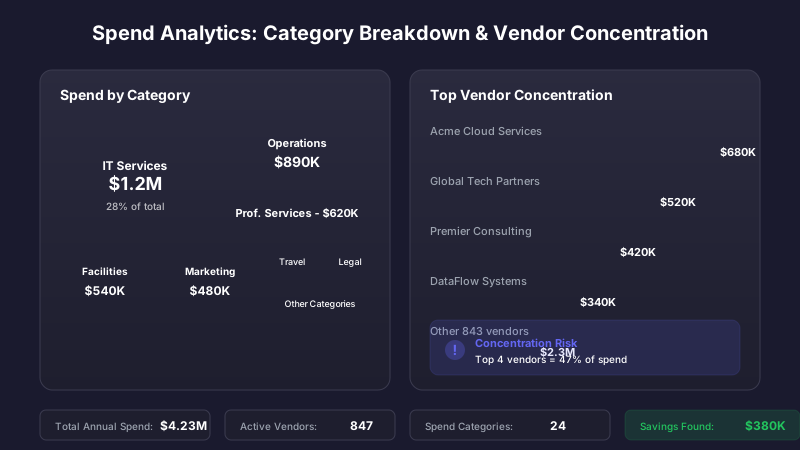
Spend analytics reveals purchasing patterns and consolidation opportunities across your vendor base
Vendor Performance Analytics
Your AP data contains a comprehensive record of vendor behavior—delivery timing, invoice accuracy, pricing consistency, and payment patterns. Analyzing this data helps you identify your best partners, flag underperforming vendors, and make data-driven sourcing decisions.
Vendor Performance Scorecard Metrics
Invoice Accuracy Rate
Percentage of invoices without errors or discrepancies
Target: 98%+
On-Time Delivery Rate
Orders received within promised timeframe
Target: 95%+
Price Variance
Deviation from contracted or quoted pricing
Target: <2%
Exception Resolution Time
Average days to resolve invoice disputes
Target: <5 days
Process Analytics: Optimizing AP Operations
Beyond external spending, AP analytics reveals the efficiency of your internal processes. Cycle time analysis, bottleneck identification, and exception pattern analysis help you streamline operations and reduce processing costs.
Key process metrics to track include:
- Invoice cycle time: Days from receipt to payment approval
- Touch rate: Number of manual interventions per invoice
- Exception rate: Percentage of invoices requiring manual review
- Approval bottlenecks: Where invoices stall in the workflow
- Rework rate: Invoices returned for correction or reprocessing
Process mining technology can automatically map your actual AP workflows from transaction logs, revealing inefficiencies invisible to traditional analysis. Organizations often discover that their real processes differ significantly from documented procedures—and those variations create hidden costs.
Building Your AP Analytics Capability
Implementing effective AP analytics requires the right combination of data, technology, and organizational commitment. Here's a practical roadmap for building analytics capabilities that deliver measurable business value.
Step 1: Establish Data Foundation
Analytics is only as good as the underlying data. Before investing in advanced analytics tools, ensure your transaction data is complete, accurate, and accessible. Key considerations include:
- Data completeness: Are all invoice fields captured consistently?
- Historical depth: How far back does your usable data extend?
- Vendor master quality: Are vendor records deduplicated and standardized?
- Category taxonomy: Is spend categorized using consistent classifications?
- Integration: Can you link AP data with PO, receiving, and contract data?
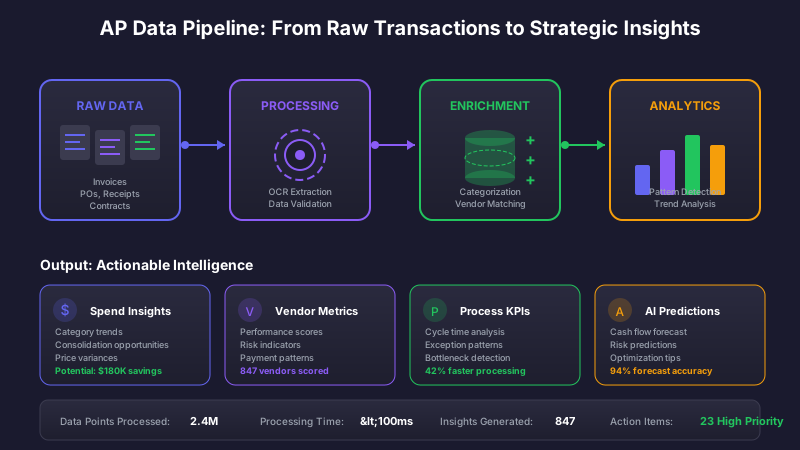
A robust data pipeline transforms raw transaction data into actionable intelligence
Step 2: Define Key Metrics and KPIs
Effective analytics starts with clear questions. Work with stakeholders across finance, procurement, and operations to identify the metrics that matter most to your organization. Avoid the trap of measuring everything—focus on metrics that drive decisions.
High-Impact AP Metrics
Spend Metrics
- - Total spend by category/vendor
- - Contract compliance rate
- - Maverick spend percentage
- - Price variance trends
Efficiency Metrics
- - Cost per invoice
- - Days payable outstanding
- - Early payment discount capture
- - Touchless processing rate
Step 3: Implement Analytics Technology
The technology landscape for AP analytics ranges from embedded reporting in AP automation platforms to specialized spend analytics solutions to enterprise business intelligence tools. Your choice depends on your data volume, analytical sophistication, and existing technology stack.
Analytics Technology Options
Embedded AP Reporting
Built into AP automation platforms. Good for operational metrics but limited for advanced analytics. Best for: Organizations starting their analytics journey.
Spend Analytics Platforms
Purpose-built for procurement analytics with AI-powered categorization. Strong spend visibility but may lack process analytics. Best for: Procurement-focused organizations.
Enterprise BI Tools
Flexible platforms like Power BI, Tableau, or Looker. Require more setup but enable custom analysis. Best for: Organizations with mature data capabilities.
Step 4: Build Analytical Workflows
Technology alone doesn't create value—you need workflows that translate insights into action. Establish regular review cadences, define escalation paths for anomalies, and integrate analytics into procurement and finance decision processes.
Common Analytics Pitfalls
- - Analysis paralysis: Generating reports without driving decisions
- - Dirty data: Drawing conclusions from incomplete or inaccurate data
- - Siloed insights: Keeping analytics within AP instead of sharing with procurement
- - One-time analysis: Treating analytics as a project instead of ongoing capability
- - Vanity metrics: Tracking numbers that look good but don't inform action
Advanced Analytics: Predictive and Prescriptive Insights
Organizations with mature analytics capabilities are moving beyond descriptive reporting to predictive and prescriptive analytics. These advanced techniques use machine learning to forecast trends and recommend optimal actions.
Predictive Analytics Applications
- Cash flow forecasting: Predict payment timing based on historical patterns and vendor behavior
- Vendor risk scoring: Identify vendors likely to have delivery or quality issues
- Price trend forecasting: Anticipate category price movements to optimize buying timing
- Exception prediction: Flag invoices likely to require manual intervention before they enter the queue
Prescriptive Analytics Applications
- Payment optimization: Recommend optimal payment timing balancing discounts, cash position, and vendor relationships
- Vendor selection: Suggest best vendors based on total cost, performance history, and risk
- Contract negotiation: Identify specific terms to target based on spend analysis and market data
- Process routing: Dynamically assign invoices to optimal processing paths
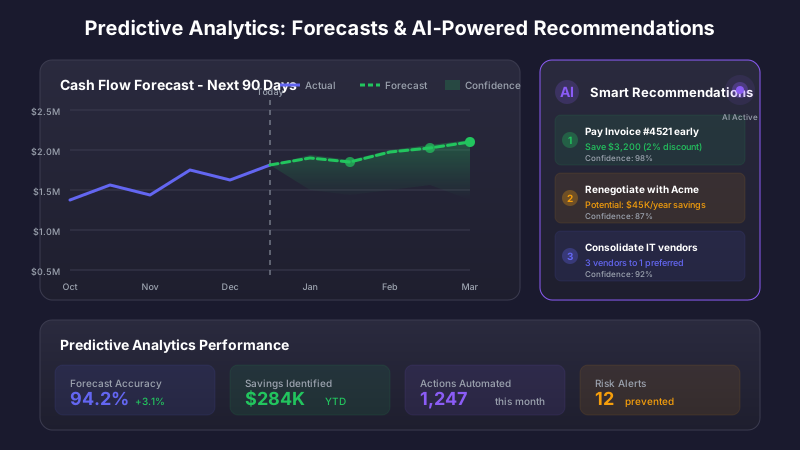
Predictive analytics transforms historical data into forward-looking intelligence
Measuring Analytics ROI
AP analytics investments should deliver measurable returns. Track both the direct financial impact and the operational improvements that result from data-driven decision making.
Analytics Value Realization
Getting Started: Your 90-Day Analytics Roadmap
Transforming AP data into strategic insights doesn't require a massive initiative. Here's a practical 90-day plan to build foundational analytics capabilities:
90-Day Analytics Implementation
Days 1-30
Data Assessment
Audit data quality, identify gaps, clean vendor master, establish data governance
Days 31-60
Core Reporting
Build spend dashboards, vendor scorecards, and process efficiency metrics
Days 61-90
Action Integration
Establish review cadences, integrate with procurement, launch first improvement initiatives
Quick Win: Top 10 Vendor Analysis
Start with a simple but powerful analysis: profile your top 10 vendors by spend. For each, calculate total annual spend, invoice volume, average invoice value, exception rate, and days to pay. This single view often reveals immediate opportunities for consolidation, renegotiation, or process improvement worth hundreds of thousands of dollars.
The Future of AP Analytics
The evolution of AP analytics is accelerating. Emerging technologies are making sophisticated analysis accessible to organizations of all sizes, while AI is automating the journey from data to insight to action.
Key trends shaping the future include:
- Real-time analytics: Moving from batch reporting to continuous monitoring
- Natural language queries: Asking questions in plain English instead of building reports
- Autonomous optimization: AI systems that automatically act on insights
- Ecosystem analytics: Insights that span supplier and customer networks
- Embedded intelligence: Analytics built into every AP transaction and workflow
The Bottom Line
Your AP department isn't just processing invoices—it's generating a continuous stream of strategic intelligence. Organizations that invest in analytics capabilities unlock value that extends far beyond accounts payable, influencing procurement strategy, vendor relationships, and financial performance.
The gap between organizations using data strategically and those treating AP as purely transactional grows wider every year. Start building your analytics capability now—even small steps deliver meaningful insights and establish the foundation for more sophisticated analysis over time.
The data is already flowing through your systems. The only question is whether you'll extract its value or let it pass unused.
Ryan Shugars
Director of Product
Ryan has spent 15 years as a Systems Architect, building enterprise solutions that transform how organizations manage their financial operations.