AI Chatbots for AP: Automating Vendor Inquiries and Payment Status Requests
Every day, your AP team fields hundreds of vendor inquiries: "When will I get paid?" "Did you receive my invoice?" "Why was my payment short?" AI chatbots can handle these routine questions instantly, 24/7, freeing your team to focus on work that actually requires human judgment.
Ryan Shugars
Director of Product
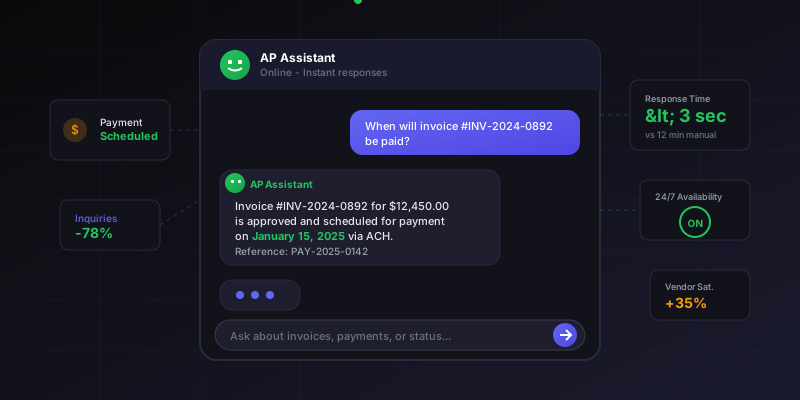
The average AP department spends 30-40% of its time responding to vendor inquiries. Most of these questions follow predictable patterns and have straightforward answers that can be retrieved from existing systems. AI-powered chatbots are transforming this dynamic, providing instant responses to vendors while dramatically reducing the operational burden on AP teams.
Unlike traditional IVR systems or static FAQ pages, modern AI chatbots understand natural language, can access real-time data from your AP systems, and handle multi-turn conversations with context awareness. They don't just deflect inquiries—they actually resolve them, delivering the specific information vendors need about their invoices, payments, and account status.
The Vendor Inquiry Problem: A Data-Driven Perspective
Before exploring chatbot solutions, it's crucial to understand the scope of the vendor inquiry challenge. Research from the Institute of Finance and Management (IOFM) reveals that vendor communication consumes a disproportionate share of AP resources.
The Scale of Vendor Inquiries
Of vendor inquiries are about payment status or timing
Average time to research and respond to a single inquiry
Daily time spent on vendor inquiries by an average AP team
Average fully-loaded cost per manually handled inquiry
The repetitive nature of these inquiries is what makes them perfect candidates for automation. When 73% of questions follow the same pattern—"Where's my payment?"—and the answers exist in your systems, there's no reason a human needs to be the intermediary. AI chatbots bridge the gap between your data and your vendors, providing instant self-service that benefits everyone.
What Modern AP Chatbots Can Actually Do
Today's conversational AI has evolved far beyond scripted responses. Modern AP chatbots leverage large language models and real-time system integrations to handle sophisticated vendor interactions.
Payment Status and Timing
The most common chatbot use case addresses the most common vendor question. An effective payment status chatbot can:
- Retrieve current status: Tell vendors exactly where their invoice is in the approval workflow
- Provide payment dates: Share scheduled payment dates based on terms and approval status
- Explain delays: Identify holds, missing information, or approval bottlenecks
- Confirm payments: Provide payment confirmation with method, date, and amount details
- Access remittance: Deliver remittance advice showing which invoices were included in a payment
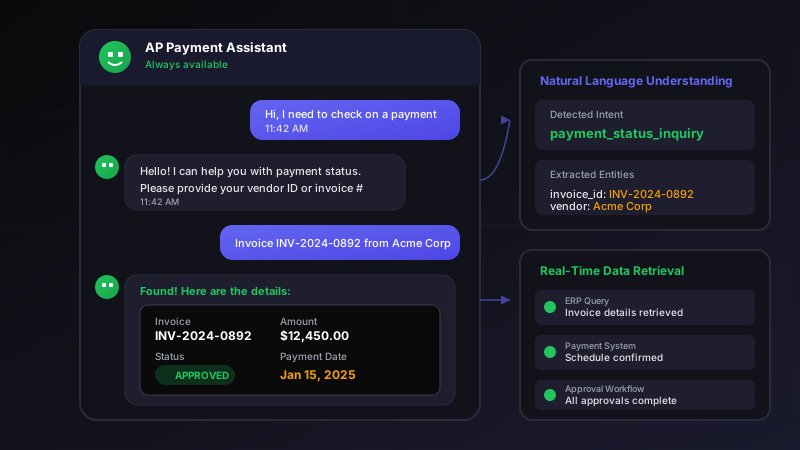
Modern chatbots understand natural language and provide specific, actionable responses
Invoice Status and Documentation
Beyond payment questions, vendors frequently need information about invoice processing and documentation. Chatbots excel at these inquiries as well:
Invoice-Related Chatbot Capabilities
- Confirm invoice receipt with date and reference number
- Identify missing information or required documentation
- Explain rejection reasons and next steps
- Provide copies of submitted invoices
- Share PO matching results and discrepancy details
- Guide vendors through exception resolution
Account and Vendor Information
Chatbots can also handle account-level inquiries that would otherwise require AP staff to look up vendor records:
- Account balance: Current open balance across all invoices
- Statement generation: On-demand statement creation for any period
- Payment history: Historical payment records with dates and amounts
- Tax documents: Access to 1099s and other tax-related information
- Profile updates: Guide vendors through contact and banking information changes
Implementation Architecture: How AP Chatbots Work
Understanding the technical architecture helps set realistic expectations and guides implementation decisions. Modern AP chatbots combine several key components:
Chatbot Architecture Components
Natural Language Understanding (NLU)
Interprets vendor intent from conversational input, handling variations in how questions are asked and extracting key entities like invoice numbers and vendor IDs.
Real-Time System Integration
API connections to your ERP, AP system, and payment platform enable live data retrieval for accurate, current responses.
Authentication and Security
Vendor verification ensures sensitive payment information is only shared with authorized users through secure authentication workflows.
Conversation Management
Context tracking across multi-turn conversations maintains understanding throughout complex interactions with follow-up questions.
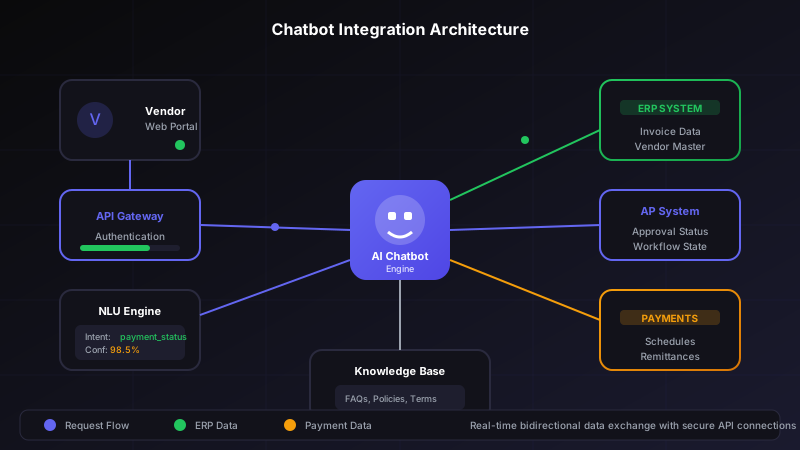
Effective chatbots integrate deeply with existing AP infrastructure for real-time data access
Measuring Chatbot ROI
Organizations implementing AP chatbots consistently report significant returns across multiple dimensions. The ROI comes from both direct cost savings and indirect efficiency improvements.
Expected Chatbot ROI Metrics
Inquiry Deflection Rate
Percentage of inquiries resolved without human intervention
Typical Result: 60-80% deflection
Response Time
Average time to first response
Typical Result: Seconds vs. hours
Cost Per Inquiry
Reduction in fully-loaded cost per vendor inquiry
Typical Result: 85-90% reduction
Staff Time Recovered
Hours redirected to higher-value activities
Typical Result: 15-25 hours/week
Best Practices for AP Chatbot Implementation
Success with AP chatbots depends on thoughtful implementation that considers both technical and human factors. Here are proven strategies for maximizing chatbot effectiveness:
Start with High-Volume, Low-Complexity Inquiries
The best chatbot implementations start narrow and expand. Begin with the queries that consume the most staff time while having straightforward answers:
Priority Use Cases for Launch
- Payment status: When will I be paid? Has my payment been sent?
- Invoice receipt: Did you receive my invoice? What's my invoice number?
- Account balance: What do I owe? What's my current balance?
- Statement requests: Can I get a statement for last month?
Design Clear Escalation Paths
Even the best chatbots can't handle every situation. When the bot reaches its limits, vendors need a seamless path to human assistance. Effective escalation design includes:
- Intent detection: Recognize when queries exceed chatbot capabilities
- Context handoff: Transfer conversation history to human agents
- Priority routing: Direct escalations to appropriate team members based on issue type
- Scheduled callbacks: Let vendors request callbacks during business hours
- Case creation: Automatically create tickets for complex issues
Authenticate Vendors Securely
Payment information is sensitive, and chatbots must verify vendor identity before sharing specific details. Authentication approaches include:
Vendor Authentication Methods
- Portal integration: Link chatbot to vendor portal for authenticated users
- Multi-factor verification: Validate with vendor ID plus invoice number or amount
- Email verification: Send verification code to registered email address
- Tiered information: Provide general status without auth, details with auth
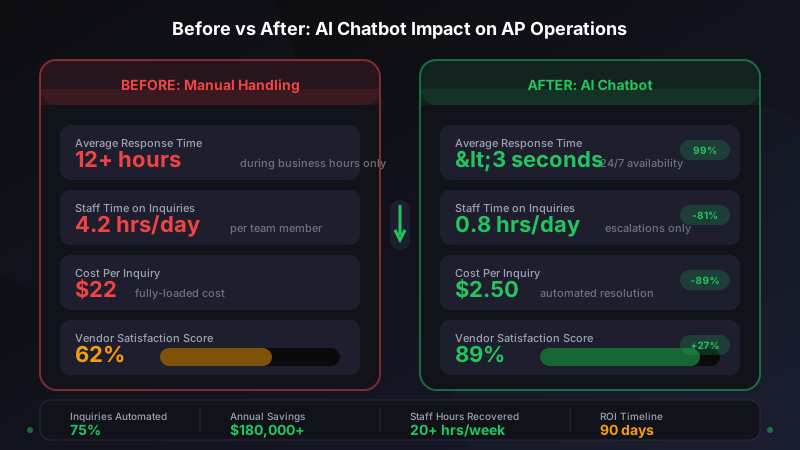
Chatbot implementation transforms both AP operations and vendor experience
Common Implementation Challenges and Solutions
Understanding potential obstacles helps you plan for successful deployment:
Implementation Challenges
Data Quality Issues
Chatbot accuracy depends on clean, current data in source systems.
Vendor Adoption
Some vendors prefer calling even when self-service is available.
Integration Complexity
Connecting to legacy ERP systems can require custom development.
Scope Creep
Pressure to add capabilities can delay initial launch.
The Vendor Experience Advantage
While cost savings often drive chatbot adoption, the vendor experience improvements are equally significant. In competitive supply markets, being easy to work with influences vendor pricing, priority, and service levels.
Vendor Benefits from Chatbot Implementation
- 24/7 availability: Get answers any time, not just during business hours
- Instant responses: No waiting for callbacks or email replies
- Consistent information: Same accurate data every time
- Self-service control: Resolve issues without depending on AP staff schedules
- Reduced friction: Quick answers enable faster business decisions
Getting Started: Your Chatbot Implementation Roadmap
Implementing an AP chatbot is a substantial initiative with meaningful returns. Here's a practical roadmap to guide your implementation:
Phase 1: Discovery (Weeks 1-2)
- Analyze current inquiry volumes and types
- Document top 10 most common vendor questions
- Assess data quality in source systems
- Evaluate integration requirements with existing platforms
Phase 2: Build and Test (Weeks 3-6)
- Configure chatbot with priority use cases
- Integrate with ERP and AP systems
- Design authentication workflows
- Test with internal users playing vendor roles
- Build escalation paths and agent handoffs
Phase 3: Launch and Expand (Weeks 7+)
- Pilot with select high-volume vendors
- Monitor performance and refine responses
- Expand to all vendors with clear communication
- Add new use cases based on conversation analysis
- Track ROI metrics and optimize continuously
The Bottom Line
AI chatbots represent one of the highest-impact automation opportunities in accounts payable. They address a massive time sink—vendor inquiries—while improving the experience for both your team and your suppliers. The technology is mature, the ROI is proven, and implementation timelines are measured in weeks, not months.
The question isn't whether to implement an AP chatbot—it's whether you'll capture the benefits before your vendors expect this level of service as standard. Organizations that move early gain efficiency advantages and strengthen supplier relationships. Those that delay continue paying the hidden costs of manual vendor communication.
Modern AP automation platforms increasingly include conversational AI capabilities, making chatbot implementation more accessible than ever. The era of AP professionals spending half their day answering "Where's my payment?" is ending. The organizations that recognize this shift—and act on it—will lead the next generation of AP operations.
Ryan Shugars
Director of Product
Ryan has spent 15 years as a Systems Architect, building enterprise solutions that transform how organizations manage their financial operations.