AP Automation Change Management: Driving User Adoption and Realizing Full Value
Technology alone does not transform AP operations. The difference between successful automation and expensive shelfware lies in how well you manage the human side of change. Here is the playbook for driving adoption that sticks.
Ryan Shugars
Director of Product
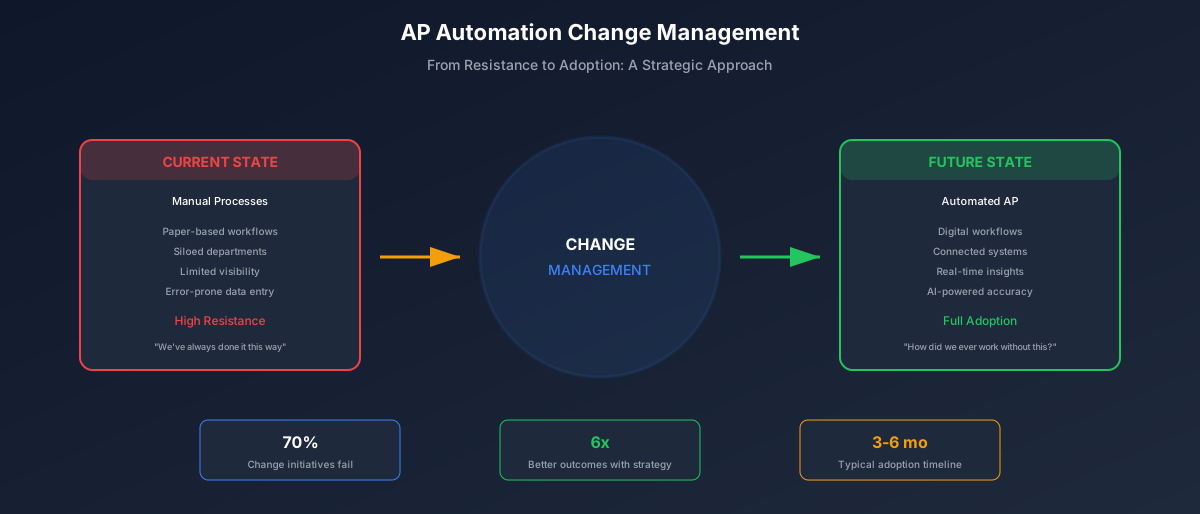
Studies consistently show that 70% of organizational change initiatives fail to achieve their objectives. AP automation projects are no exception. The technology works, the ROI is real, but adoption stalls because organizations underestimate the human factors that determine success.
This guide provides a proven framework for managing change throughout your AP automation journey, from initial stakeholder alignment through sustained adoption and continuous improvement.
Why AP Automation Change Fails
Before discussing solutions, let us understand the common failure modes:
Top Reasons AP Automation Adoption Stalls
Notice that none of these failures are technology problems. They are people problems. The solution is structured change management that addresses human concerns proactively.
The Four Phases of AP Change Management
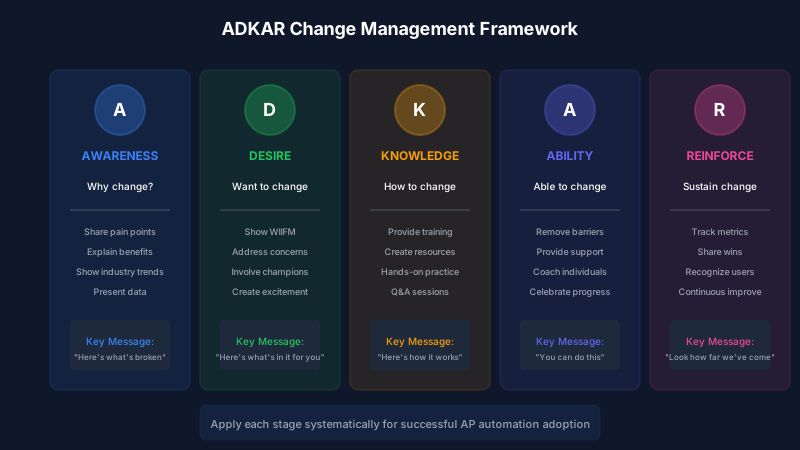
The four phases of successful AP automation change management
Phase 1: Prepare - Building the Foundation
Successful change starts before the technology arrives. The preparation phase establishes stakeholder alignment and creates the conditions for adoption.
- Identify champions: Find enthusiastic early adopters in AP who will advocate for the new system
- Secure executive sponsorship: Ensure visible support from finance leadership
- Document current state: Map existing processes to identify pain points the new system solves
- Define success metrics: Establish measurable goals everyone can track
- Communicate the "why": Help everyone understand what is in it for them personally
The WIIFM Principle
Every stakeholder asks "What's In It For Me?" Answer this question explicitly for each group: AP staff (less tedious work), approvers (faster mobile approvals), vendors (faster payments), and leadership (better visibility). Generic benefits do not drive adoption.
Phase 2: Launch - Creating Momentum
The launch phase is about creating early wins and visible success that builds confidence in the new system.
- Start small: Begin with a subset of vendors or invoice types before full rollout
- Celebrate quick wins: Share success stories from the first week
- Provide intensive support: Have help readily available during the critical first weeks
- Address issues immediately: Fast problem resolution builds trust
- Gather feedback constantly: Create channels for users to share concerns
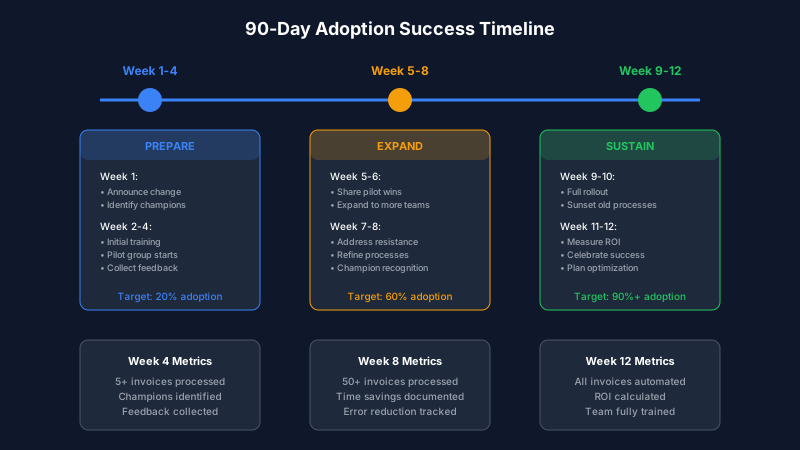
Phase 3: Adopt - Driving Sustained Usage
Adoption is the phase where many projects fail. Initial enthusiasm fades, and old habits return. Combat this with structured reinforcement.
Understanding the adoption curve: different users need different approaches
- Regular check-ins: Weekly touchpoints during the first month, then monthly
- Usage monitoring: Track who is using the system and who is not
- Address resistance directly: Have conversations with reluctant users
- Remove workarounds: Eliminate the ability to use old processes
- Reinforce benefits: Share ongoing metrics showing improvement
Phase 4: Optimize - Continuous Improvement
Once base adoption is achieved, shift focus to extracting maximum value and continuous improvement.
- Review metrics quarterly: Are you achieving the promised ROI?
- Gather enhancement requests: What additional capabilities would help?
- Expand scope: Add more vendors, invoice types, or capabilities
- Share best practices: Cross-train teams on optimal usage
- Document learnings: Create institutional knowledge for future projects
Overcoming Resistance: The Human Side
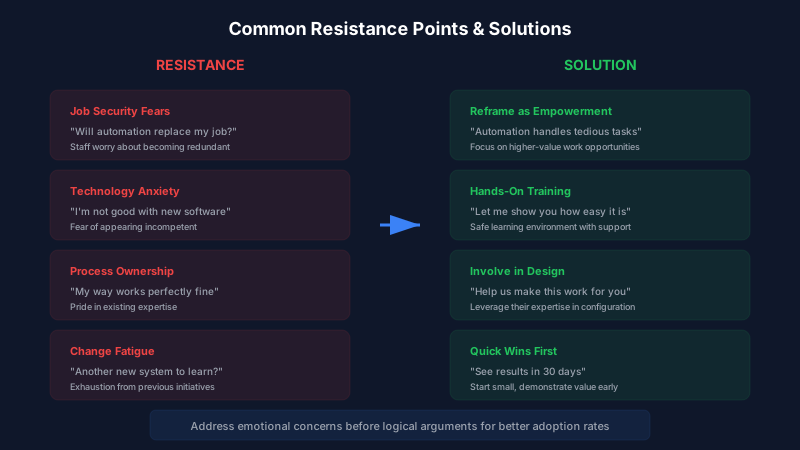
Resistance to AP automation typically comes from three sources, each requiring a different approach:
Understanding and Addressing Resistance
Fear of Job Loss
AP staff worry automation means layoffs.
Solution: Reframe as job elevation, not elimination. Show how automation enables staff to focus on higher-value work like vendor relationships, analysis, and exception handling.
Comfort with Status Quo
People prefer familiar processes, even if inefficient.
Solution: Make the old way harder than the new way. Remove manual workarounds and make automation the path of least resistance.
Lack of Confidence
Users fear they cannot learn new technology.
Solution: Provide hands-on training, readily available support, and patience. Celebrate small wins to build confidence incrementally.
Training That Actually Works
Effective AP automation training is not about teaching software features. It is about helping users accomplish their actual jobs faster and easier.
Training framework: learn, practice, apply, reinforce
Training Best Practices
- Role-based training: AP processors need different training than approvers
- Hands-on practice: Use real invoices from your organization, not generic examples
- Just-in-time learning: Provide training when users need it, not weeks before go-live
- Multiple formats: Combine live sessions, video recordings, and written guides
- Ongoing reinforcement: Schedule refresher sessions after initial training
Measuring Change Management Success
How do you know if your change management is working? Track these leading and lagging indicators:
Key Adoption Metrics
Leading Indicators
- Training attendance rates
- Daily active users
- Support ticket volume
- User satisfaction scores
Lagging Indicators
- Invoice cycle time reduction
- Error rate improvement
- Discount capture rate
- Cost per invoice
The Bottom Line
AP automation technology works. The question is whether your organization will adopt it fully enough to realize the promised benefits. Change management is not an optional add-on; it is the difference between transformation and expensive failure.
Start change management before the technology arrives. Communicate relentlessly about benefits. Train people on their actual jobs, not software features. Address resistance with empathy and clarity. Measure adoption and hold people accountable.
The organizations that master change management do not just implement AP automation. They transform their finance operations and never look back.
Ryan Shugars
Director of Product
Ryan has spent 15 years as a Systems Architect, building enterprise solutions that transform how organizations manage their financial operations.