AP Business Continuity: Ensuring Payment Operations During Disruptions
When disasters strike, whether natural catastrophes, pandemics, cyberattacks, or system failures, accounts payable operations must continue. Vendors expect payment, employees need reimbursements, and supply chains depend on uninterrupted financial flows. Here's how to build AP resilience that withstands any disruption.
Ryan Shugars
Director of Product
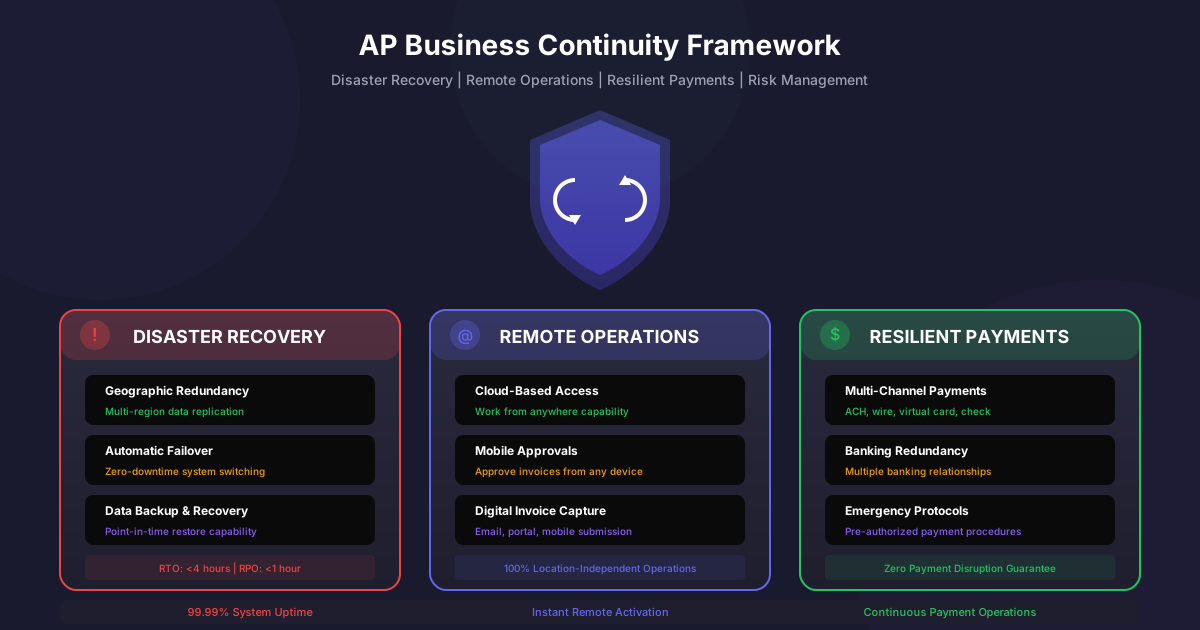
The COVID-19 pandemic revealed an uncomfortable truth for many organizations: their accounts payable operations were dangerously fragile. Companies that relied on paper-based processes, on-premise systems, and office-bound workflows found themselves scrambling to pay vendors while their teams worked from home. Some organizations missed critical payments, damaged supplier relationships, and faced late payment penalties. Others discovered that their AP systems simply could not function without physical access to office infrastructure.
The lessons from 2020 and beyond are clear: AP business continuity is not optional. Organizations must build resilient payment operations that can withstand any disruption, whether a global pandemic, a regional natural disaster, a cyberattack, or simply an extended power outage. The financial and operational costs of AP downtime are too significant to ignore, and vendor relationships are too valuable to jeopardize with payment delays.
The True Cost of AP Disruptions
When AP operations halt, the consequences ripple throughout the organization and its supply chain:
Impact of AP Downtime
- Late payment fees (1.5-2% per month typical)
- Lost early payment discounts (2% loss)
- Credit rating impacts
- Interest on emergency financing
- Supplier credit holds
- Supply chain interruptions
- Renegotiated payment terms
- Lost preferred customer status
- Production stoppages from material shortages
- Service delivery interruptions
- Employee expense reimbursement delays
- Compliance violations and audit findings
- Overtime to process backlog
- Emergency payment processing fees
- Vendor relationship repair efforts
- Audit and compliance remediation
Research indicates that the average cost of IT downtime for businesses is between $5,600 and $9,000 per minute. While AP may not represent the entire organization's IT operations, payment disruptions can cascade quickly into supply chain failures, production halts, and damaged vendor relationships that take months or years to repair.
Key Disruption Scenarios for AP
Effective business continuity planning requires understanding the types of disruptions that can impact AP operations. Each scenario presents unique challenges and requires specific mitigation strategies:
- Natural Disasters: Hurricanes, earthquakes, floods, and severe weather can destroy physical infrastructure, displace workers, and eliminate access to office locations for extended periods.
- Pandemics and Health Emergencies: As COVID-19 demonstrated, public health crises can require immediate transition to remote work while maintaining full operational capability.
- Cyberattacks: Ransomware, data breaches, and system compromises can shut down AP systems instantly, with recovery potentially taking weeks.
- Infrastructure Failures: Power outages, network failures, and hardware crashes can disable on-premise systems without warning.
- Vendor System Outages: ERP system failures, banking system outages, and third-party application disruptions can halt payment processing even when your internal systems remain operational.
- Civil Disruptions: Protests, transportation shutdowns, and civil unrest can prevent employees from accessing work locations.
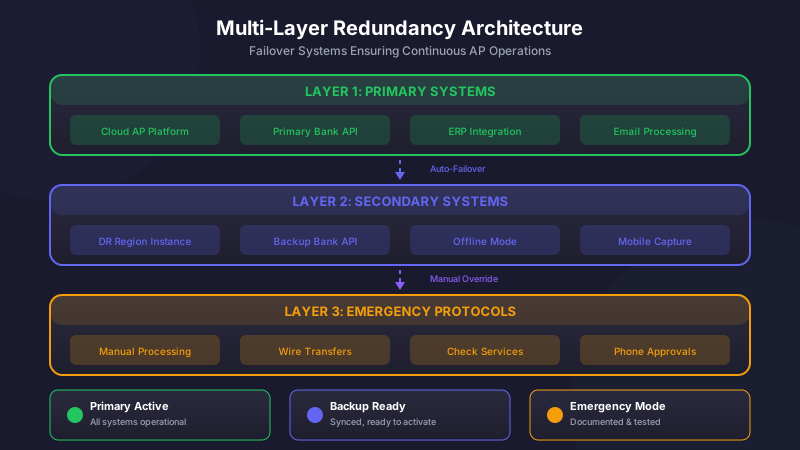
Multi-layer redundancy ensures AP operations continue through any disruption scenario
Building Blocks of AP Resilience
Resilient AP operations require a comprehensive approach that addresses technology, processes, people, and vendor relationships. Here are the essential building blocks:
Cloud-Based AP Infrastructure
The single most impactful step toward AP resilience is moving to cloud-based infrastructure. Cloud-native AP platforms provide:
- Geographic Redundancy: Data and applications replicated across multiple regions, ensuring availability even if entire data centers fail
- Automatic Failover: Systems that detect failures and route traffic to healthy instances without human intervention
- Anywhere Access: Secure access from any location with internet connectivity, enabling true remote work capability
- Scalable Capacity: Ability to handle processing surges when catching up from disruptions
- Automatic Updates: Security patches and system updates applied without on-premise IT intervention
Cloud AP Uptime Standards
Enterprise cloud platforms typically guarantee 99.9% or higher uptime, translating to less than 9 hours of downtime per year. Leading AP automation platforms achieve 99.99% availability, or approximately 52 minutes of downtime annually. Compare this to on-premise systems, which average 4+ hours of unplanned downtime per month.
Digital Invoice Capture and Processing
Paper-based AP processes are inherently fragile. When employees cannot access the office, paper invoices pile up unopened, unscanned, and unprocessed. Digital-first invoice capture eliminates this vulnerability:
- Email Invoice Capture: Invoices submitted via email are captured automatically, regardless of employee location
- Supplier Portals: Vendors submit invoices directly into your system, bypassing mail and physical handling
- Mobile Capture: AP team members can capture and submit invoices from smartphones when office equipment is unavailable
- E-invoicing Integration: EDI and electronic invoice networks continue operating independent of physical location
Automated Approval Workflows
Manual approval routing depends on people being available at specific locations or having access to specific systems. Automated workflows ensure approvals continue:
- Mobile Approvals: Approvers can review and approve invoices from any device, anywhere
- Automated Delegation: When primary approvers are unavailable, invoices automatically route to designated alternates
- Threshold-Based Auto-Approval: Low-risk invoices matching contracts and POs process automatically without manual intervention
- Escalation Rules: Invoices stuck in approval queues automatically escalate to prevent bottlenecks
Approval Continuity Framework
Primary Approver Available
Normal routing to designated approver
Primary Unavailable > 24 Hours
Auto-route to designated backup approver
Backup Unavailable > 48 Hours
Escalate to department head or finance leader
Emergency Mode Active
Pre-authorized emergency approvers handle all invoices
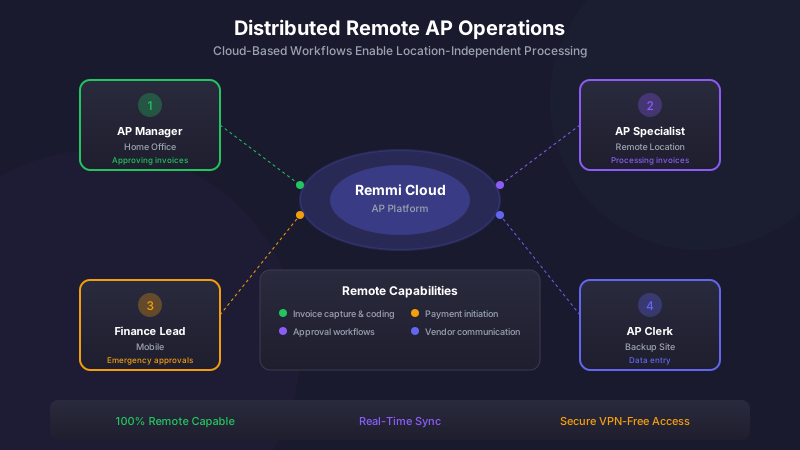
Cloud-based AP enables fully distributed operations with complete visibility and control
Payment Continuity Strategies
Ensuring payments continue during disruptions requires multiple channels and redundant systems:
Diversified Payment Methods
Relying on a single payment method creates vulnerability. Organizations should maintain capability across multiple channels:
- ACH Payments: Primary electronic payment method, typically most cost-effective and widely accepted
- Virtual Cards: Immediate payment capability with enhanced security and potential rebate revenue
- Wire Transfers: For urgent payments when other methods are unavailable or for international vendors
- Check Printing Services: Outsourced check printing eliminates dependence on office-based equipment
Banking Relationship Redundancy
Bank system outages can halt payments even when your AP systems remain operational. Mitigation strategies include:
- Multiple Banking Relationships: Ability to initiate payments through alternate banks if primary bank experiences issues
- Direct API Connections: Integration that bypasses web interfaces, which are often first to fail during outages
- Pre-Authorized Payment Files: Ability to stage payment files for immediate processing when systems restore
Emergency Payment Protocol
Establish clear emergency payment procedures before disruptions occur. Define who can authorize emergency payments, what approval thresholds apply, and which vendors are priority for payment. Document alternative payment methods and ensure at least two team members know how to execute each one.
Data Protection and Recovery
AP data is critical financial information that must be protected and recoverable:
Backup Strategies
- Real-Time Replication: Data continuously replicated to geographically separate locations
- Point-in-Time Recovery: Ability to restore data to any specific moment, not just last backup
- Encrypted Backups: All backup data encrypted at rest and in transit
- Regular Recovery Testing: Monthly or quarterly verification that backups can actually be restored
Recovery Time Objectives
Define and document recovery expectations for AP systems:
AP Recovery Time Targets
- Payment processing capability
- Vendor master data access
- Emergency approval workflows
- Banking integrations
- Invoice capture and processing
- Standard approval workflows
- Reporting and analytics
- Vendor inquiry response
- Historical invoice retrieval
- Advanced analytics
- Non-critical integrations
- Audit report generation
- Archive data access
- Training environments
- Development and testing
- Non-essential reports
People and Process Continuity
Technology alone cannot ensure AP continuity. People and processes must be equally prepared for disruptions:
Cross-Training and Documentation
- Role Redundancy: At least two people trained to perform each critical AP function
- Process Documentation: Step-by-step procedures documented and accessible remotely
- Vendor Contact Lists: Current vendor contacts maintained in accessible systems, not just email contacts
- Emergency Procedures: Clear guidance on priorities and procedures during disruptions
Communication Plans
Disruptions require clear communication with multiple stakeholders:
- Internal Teams: Keep approvers, requestors, and finance leadership informed of AP status
- Vendors: Proactively communicate payment delays and expected resolution timelines
- Banking Partners: Coordinate with banks on payment timing and alternative procedures
- Management: Regular status updates on AP operations, backlog, and recovery progress
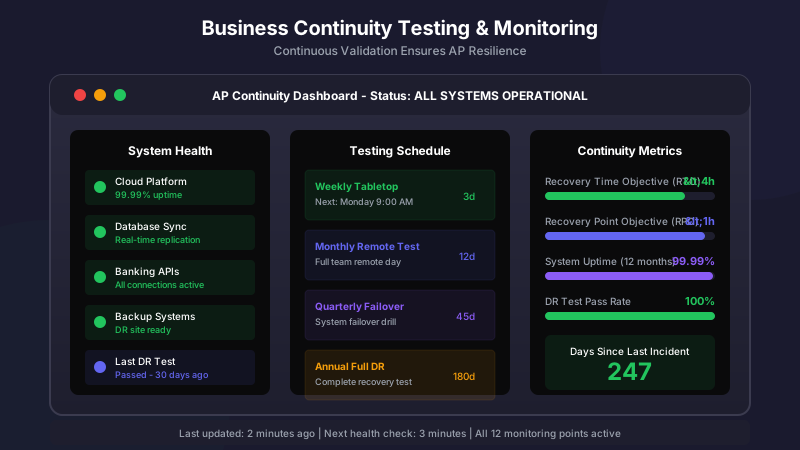
Regular testing and monitoring ensure AP continuity plans remain effective
Testing Your AP Continuity Plan
An untested continuity plan is little better than no plan at all. Regular testing ensures that your AP operations can actually survive disruptions:
Testing Framework
- Tabletop Exercises (Quarterly): Walk through disruption scenarios with key personnel to identify gaps in procedures
- Remote Work Tests (Semi-Annually): Have the entire AP team work remotely for a full day to verify systems and processes function properly
- Failover Tests (Annually): Actually fail over to backup systems and verify payment processing continues
- Full DR Tests (Annually): Simulate complete loss of primary systems and execute full recovery procedures
Post-Test Review
After each test, conduct a formal review: What worked? What failed? What was harder than expected?Update procedures, fix technical issues, and retest problem areas. Document all findings and track remediation to completion.
Vendor Relationship Continuity
Your vendors are partners in business continuity. Proactive relationship management helps weather disruptions together:
- Payment Term Flexibility: Negotiate payment term extensions that can be invoked during declared emergencies
- Communication Channels: Maintain multiple contact methods for key vendors (email, phone, portal, emergency contacts)
- Payment Priority Lists: Identify critical vendors whose payments must continue even in reduced-operation scenarios
- Early Warning: Commit to proactively notifying vendors of potential payment delays before they become overdue
Leveraging AP Automation for Resilience
Modern AP automation platforms are designed with business continuity as a core capability. Key features that support resilience include:
- Cloud-Native Architecture: Built for high availability with automatic failover and geographic redundancy
- Mobile-First Design: Full functionality available from any device, enabling true location-independent operations
- Intelligent Automation: AI-powered processing that continues without human intervention, reducing dependency on staff availability
- Integrated Communications: Built-in vendor communication tools that maintain relationship continuity
- Real-Time Visibility: Dashboards showing processing status, bottlenecks, and recovery progress
Your AP Continuity Action Plan
Building resilient AP operations requires systematic effort across technology, processes, and people. Start with these priorities:
- Assess Current State: Identify single points of failure in your current AP operations, systems, and personnel
- Prioritize Cloud Migration: If running on-premise AP systems, develop a migration plan to cloud-based platforms
- Eliminate Paper Dependencies: Implement digital invoice capture and eliminate paper-based process steps
- Document and Cross-Train: Create detailed procedure documentation and ensure role redundancy
- Establish Emergency Protocols: Define clear procedures for emergency payments, approvals, and communications
- Implement Regular Testing: Schedule and execute continuity tests on a defined cadence
- Build Vendor Relationships: Communicate with key vendors about mutual continuity expectations
The organizations that invested in AP resilience before the pandemic were able to transition seamlessly to remote operations while their competitors scrambled. The next major disruption, whatever form it takes, will similarly separate prepared organizations from those caught off guard. The question is not whether your AP operations will face a disruption, but whether they will survive it.
Ryan Shugars
Director of Product
Ryan has spent 15 years as a Systems Architect, building enterprise solutions that transform how organizations manage their financial operations.