Integrating AP and AR: Cash Flow Optimization Through Coordinated Management
Most organizations manage accounts payable and accounts receivable as completely separate functions. They sit in different departments, report to different managers, and operate with different goals. This siloed approach leaves millions of dollars in working capital optimization on the table.
Ryan Shugars
Director of Product
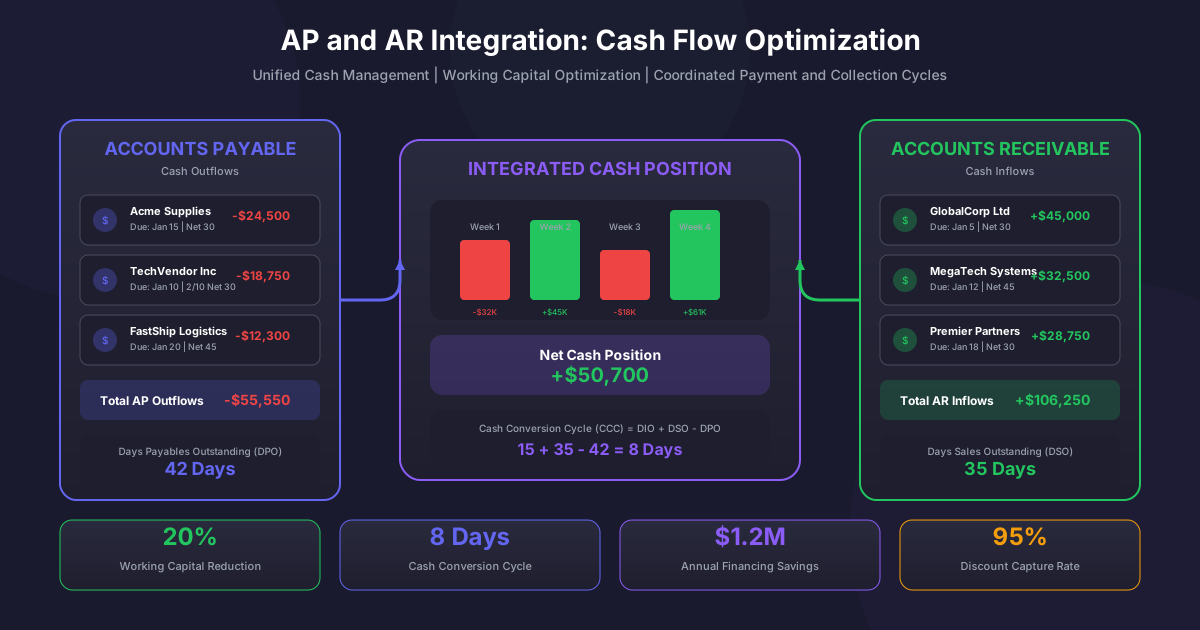
The cash conversion cycle is the heartbeat of every business. Money flows out through accounts payable to suppliers, and money flows back in through accounts receivable from customers. When these two critical functions operate independently, organizations experience unnecessary cash gaps, missed optimization opportunities, and higher borrowing costs. The solution is coordinated AP and AR management that treats cash flow as a unified system.
Forward-thinking finance leaders are breaking down the walls between AP and AR, creating integrated strategies that maximize cash availability while minimizing the cost of capital. This article explores how to align payables and receivables operations to transform your organization's cash position and working capital efficiency.
Understanding the Cash Conversion Cycle
Before diving into integration strategies, it's essential to understand how AP and AR interact within the cash conversion cycle (CCC). This metric measures the time between when you pay for inputs and when you receive payment for outputs:
The Cash Conversion Cycle Formula
CCC = DIO + DSO - DPO
A shorter CCC means faster conversion of investments back to cash. Negative CCC means you get paid before you pay suppliers.
The key insight is that AP (DPO) and AR (DSO) directly offset each other in this equation. Every day you accelerate collections or extend payment terms reduces your cash conversion cycle and the associated financing costs. But optimizing one without considering the other leads to suboptimal results.
The Cost of Siloed Operations
When AP and AR operate independently, several problems emerge that directly impact cash position and working capital:
Misaligned Payment Timing
Without coordination, AP might schedule large payment runs during the same weeks when AR experiences collection dips. This creates unnecessary cash crunches that force organizations to draw on credit lines or miss early payment discounts, even when adequate cash exists elsewhere in the cycle.
- Seasonal Blind Spots: AP schedules payments without visibility into seasonal AR collection patterns
- Week-End Concentration: Both functions may process at month-end, creating artificial cash pressure
- Currency Mismatch: International AP payments without coordination with foreign AR collections increases FX costs
Duplicate Efforts and Inconsistent Practices
Many organizations maintain separate processes for managing vendors and customers, even when they're the same entities. This creates inefficiency and inconsistency:
- Separate Master Data: The same company exists in both vendor and customer databases with different information
- Uncoordinated Terms: You might pay a vendor in 30 days but accept 60-day terms when they're your customer
- Missed Netting Opportunities: You pay invoices while simultaneously trying to collect from the same entity
The Hidden Cost of Silos
Research indicates that companies with siloed AP and AR operations maintain 15-25% more working capital than necessary to support their operations. For a $500M revenue company, that translates to $7.5M-$12.5M in excess cash tied up in the working capital cycle, costing $600K-$1M annually at typical borrowing rates.
Strategies for AP-AR Integration
Effective integration doesn't require reorganizing your finance department. It requires creating visibility, coordination mechanisms, and aligned incentives. Here are the key strategies:
1. Unified Cash Forecasting
The foundation of integrated cash management is a single view that combines AP outflows and AR inflows. This requires:
- Consolidated Cash Calendar: A rolling 13-week cash forecast that shows expected payments alongside expected collections
- Real-Time Visibility: Both AP and AR update the forecast as invoices are processed and payments are received
- Scenario Planning: Model how changes in payment timing or collection efforts impact overall cash position
- Variance Analysis: Track forecast accuracy for both inflows and outflows to improve predictions over time
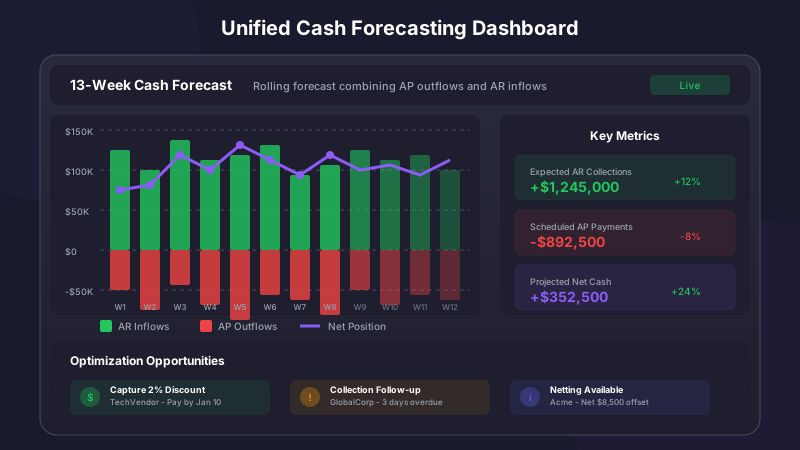
Unified forecasting provides visibility into both payment obligations and expected collections
2. Payment Timing Optimization
With unified visibility, you can strategically time payments to align with cash availability:
Payment Timing Strategies
Match Payment Runs to Collection Cycles
Schedule major AP runs 2-3 days after typical AR collection peaks
Early Payment for Strategic Discounts
Prioritize early payment when AR collections exceed forecast
Defer Non-Critical Payments
Use full payment terms when AR collections are below forecast
Currency-Aligned Settlements
Pay EUR vendors from EUR collections to minimize FX costs
3. Vendor-Customer Netting
When the same entity is both a vendor and a customer, netting agreements can dramatically improve cash efficiency:
- Identify Dual Relationships: Match vendor master against customer master to identify entities that appear in both
- Negotiate Netting Terms: Establish agreements that allow offsetting payables against receivables
- Automated Offset Processing: Systems calculate net amounts due in either direction automatically
- Reduced Transaction Costs: Fewer payments mean lower banking fees and processing costs
Netting in Practice
A manufacturing company identified that 47 of their vendors were also customers. By implementing netting agreements, they eliminated $2.3M in gross payments monthly, reducing wire transfer fees by $18,000 annually and freeing up two FTEs previously managing these transactions.
4. Aligned Incentives and Metrics
Traditional metrics can create competing incentives between AP and AR:
- AP is rewarded for maximizing DPO (paying later)
- AR is rewarded for minimizing DSO (collecting faster)
- Neither is measured on overall cash position impact
Integrated organizations measure both functions on the combined impact:
- Cash Conversion Efficiency: Track CCC improvements as a shared goal
- Working Capital Velocity: Measure how quickly working capital turns over
- Financing Cost Reduction: Track borrowing costs avoided through coordination
- Early Payment Capture Rate: Measure discounts captured relative to available discounts
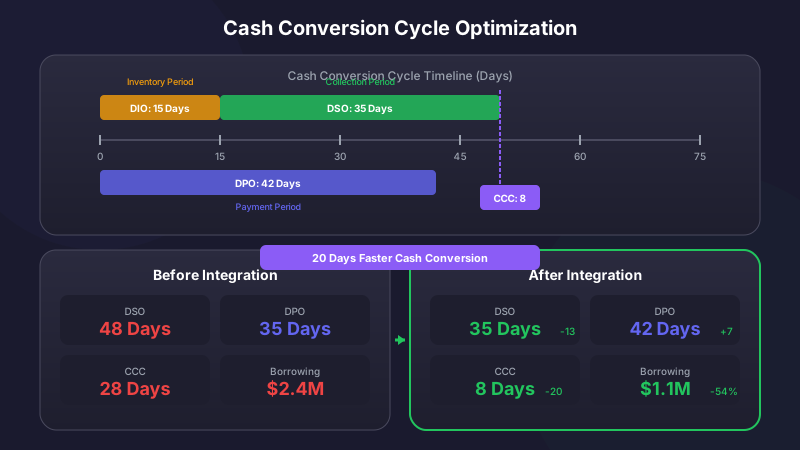
Aligned metrics ensure AP and AR work together toward cash optimization goals
Technology Enablement
While organizational alignment is essential, technology platforms that bridge AP and AR accelerate results:
Integrated ERP Modules
Modern ERP systems provide native integration between AP and AR functions:
- Shared Master Data: Single source of truth for entities that are both vendors and customers
- Consolidated Reporting: Cash flow reports that combine payables and receivables data
- Automated Netting: Built-in functionality to identify and process offsets
- Unified Workflows: Approval processes that consider the full relationship picture
Treasury Management Systems
TMS platforms provide the coordination layer between AP, AR, and banking:
- Cash Pooling: Automatically concentrate cash from multiple entities and accounts
- Payment Factory: Centralized payment execution with visibility into cash impact
- In-House Banking: Intercompany settlements that minimize external transactions
- FX Management: Coordinate currency needs across payables and receivables
Integration Architecture
- Invoice processing and approval
- Payment scheduling and execution
- Vendor master management
- Accruals and period close
- Customer invoicing and billing
- Collections and cash application
- Customer master management
- Credit management
Implementation Roadmap
Integrating AP and AR is a journey, not a one-time project. Here's a phased approach:
Phase 1: Visibility (Weeks 1-4)
- Create consolidated cash forecast combining AP and AR data
- Identify vendor-customer overlaps in master data
- Map current payment and collection timing patterns
- Calculate baseline cash conversion cycle metrics
Phase 2: Quick Wins (Weeks 5-8)
- Adjust payment run schedules to align with collection patterns
- Implement netting for largest vendor-customer relationships
- Create shared dashboard for AP and AR leadership
- Establish weekly cash coordination meetings
Phase 3: Process Integration (Weeks 9-16)
- Automate cash forecast updates from both systems
- Implement rules-based payment timing optimization
- Create unified master data management for dual entities
- Deploy integrated working capital metrics
Phase 4: Advanced Optimization (Ongoing)
- Implement dynamic discounting based on cash position
- Coordinate supply chain finance with receivables financing
- Automate FX netting across AP and AR
- Deploy AI-driven cash optimization recommendations
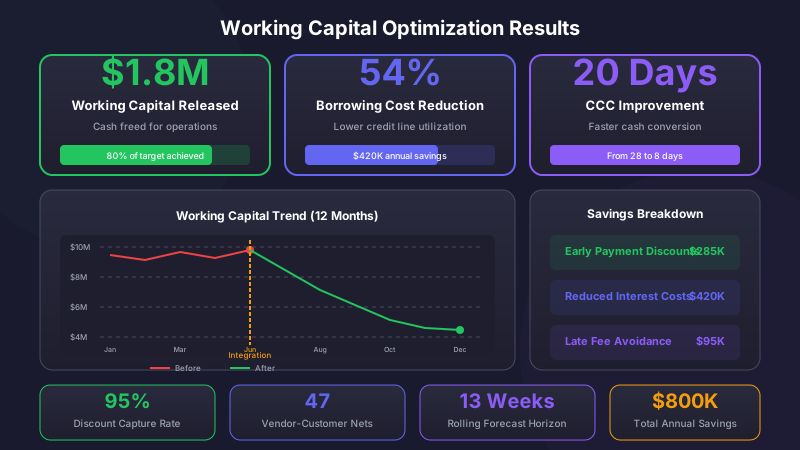
Integrated AP-AR management delivers measurable improvements in working capital efficiency
Measuring Success
Track these key metrics to quantify the impact of AP-AR integration:
Integration Impact Metrics
Common Challenges and Solutions
Organizations typically face several obstacles when integrating AP and AR:
- Organizational Resistance: AP and AR teams may be protective of their processes. Solution: Focus on shared goals and metrics that benefit both functions.
- System Silos: Different platforms for AP and AR may not easily share data. Solution: Start with manual integration via spreadsheets, then automate over time.
- Data Quality Issues: Inconsistent vendor and customer data makes matching difficult. Solution: Implement data governance standards and cleansing processes.
- Regulatory Constraints: Some industries have rules about payment timing that limit flexibility. Solution: Optimize within constraints and focus on AR acceleration.
The Future of Integrated Cash Management
Leading organizations are moving toward real-time, AI-driven cash optimization that continuously balances AP and AR:
- Predictive Analytics: AI models that forecast cash needs and recommend optimal payment timing
- Dynamic Payment Terms: Systems that automatically adjust payment timing based on real-time cash position
- Embedded Finance: Integration with supply chain finance platforms for flexible payment options
- Real-Time Treasury: Instant visibility into global cash position enabling same-day optimization
The organizations that master AP-AR integration gain a significant competitive advantage. They operate with less working capital, respond more nimbly to opportunities, and build stronger relationships with both suppliers and customers. In an era where cash efficiency can determine survival, coordinated cash management isn't optional; it's essential.
Start by creating visibility into both sides of your cash flow. Identify the quick wins available through simple timing adjustments and vendor-customer netting. Then build toward systematic integration that continuously optimizes your cash conversion cycle. The investment in coordination pays for itself many times over in reduced financing costs and improved financial flexibility.
Ryan Shugars
Director of Product
Ryan has spent 15 years as a Systems Architect, building enterprise solutions that transform how organizations manage their financial operations.