AI-Powered Fraud Detection: The New Standard in Accounts Payable Security
Accounts payable fraud costs organizations an average of $2.1 million annually, and 68% of fraud schemes run for 12 months or longer before detection. Traditional detection methods catch obvious duplicates but miss the sophisticated patterns that define modern AP fraud. Here is how AI is changing the game.
Ryan Shugars
Director of Product
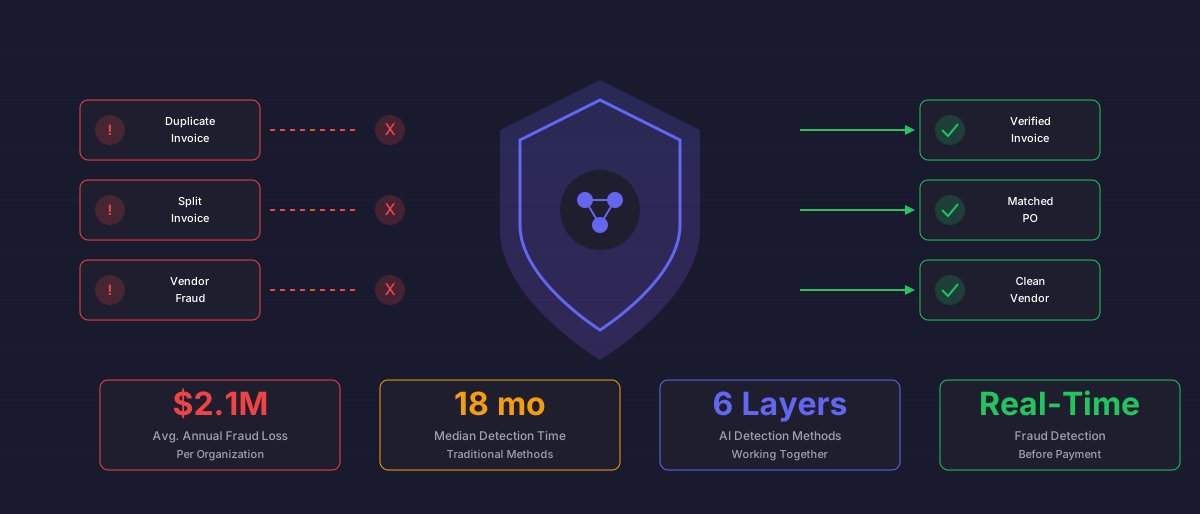
In January 2024, a mid-sized manufacturing company discovered they had paid $847,000 to a fraudulent vendor over 14 months. The invoices looked legitimate. They matched POs. They came from what appeared to be a real vendor email address. Traditional duplicate detection never flagged them because they were not duplicates. They were entirely fabricated.
This scenario plays out thousands of times each year across organizations of every size. The Association of Certified Fraud Examiners (ACFE) reports that the median duration of an AP fraud scheme is 18 months, and 22% of cases result in losses exceeding $1 million.
The uncomfortable truth is that traditional AP controls were designed for a different era. They catch the obvious mistakes: exact duplicate invoice numbers, identical amounts on the same day. But sophisticated fraud has evolved far beyond these simplistic patterns.
The Anatomy of Modern AP Fraud
Understanding how to detect fraud requires understanding how fraud happens. Modern AP fraud schemes fall into several categories, each requiring different detection approaches:
Vendor Impersonation
Fraudsters create invoices mimicking legitimate vendors, often with subtle changes to bank details. These invoices may reference real POs obtained through social engineering or data breaches.
Shell Company Schemes
Internal actors set up fake vendors and submit invoices for services never rendered. These schemes often involve invoices just below approval thresholds to avoid scrutiny.
Invoice Manipulation
Altering legitimate invoices to inflate amounts, change quantities, or modify bank details. Often combined with interception of original invoices before they reach AP.
Split Invoice Fraud
Breaking large fraudulent charges into multiple smaller invoices to stay below approval thresholds and avoid detection patterns that flag large one-time vendors.
What makes these schemes effective is their subtlety. They exploit the gaps between what traditional controls check and what sophisticated fraud looks like. An exact duplicate check will not catch a vendor impersonation invoice with a slightly modified bank account. Threshold-based approvals will not stop split invoice fraud designed specifically to fly under the radar.
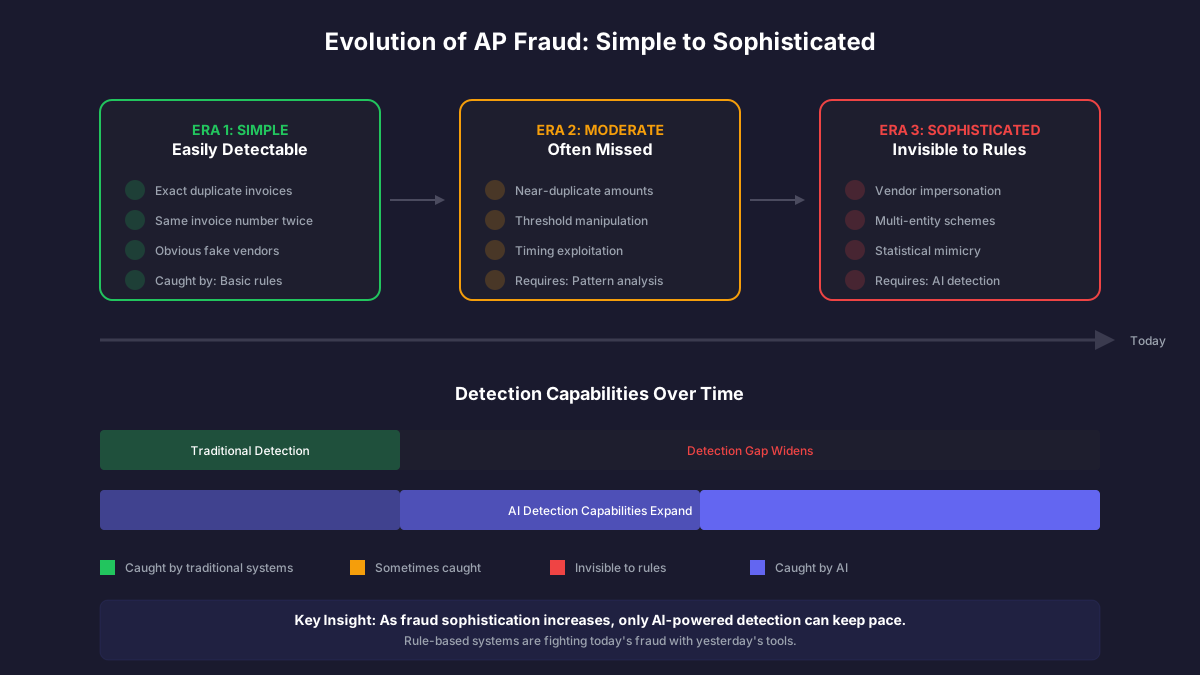
Fraud schemes have evolved faster than traditional detection methods
Why Traditional Detection Falls Short
Most AP systems include some form of duplicate detection. At minimum, they check for exact matches on invoice number, vendor, and amount. More sophisticated systems might flag invoices with similar amounts or sequential invoice numbers.
But these rule-based approaches share a fundamental limitation: they can only catch what they are explicitly programmed to look for. They work through a checklist, and fraudsters know the checklist.
Consider the detection gaps in traditional systems:
- Near-duplicates slip through: An invoice for $10,000.00 and another for $10,000.01 from the same vendor are not flagged as duplicates, even though the $0.01 difference is a classic fraud indicator.
- Threshold gaming is invisible: Five invoices for $4,900 each from a new vendor just under your $5,000 approval threshold? Rule-based systems see five unrelated invoices.
- Pattern analysis does not exist: Invoice submissions at unusual times, amounts that violate statistical distributions, vendor relationships that mirror employee addresses: none of these trigger traditional alerts.
- Historical context is ignored: Traditional systems check each invoice in isolation. They cannot recognize that this vendor's invoice pattern has fundamentally changed over the past three months.
AP Fraud: By the Numbers
$2.1M
Average annual fraud loss per organization
18 mo
Median time to detect AP fraud
68%
Of schemes run 12+ months before detection
5%
Of revenue lost to fraud annually (ACFE)
The AI Difference: Six Detection Layers Working Together
AI-powered fraud detection represents a fundamental shift from rule-based checking to pattern-based intelligence. Instead of asking "does this invoice match a specific rule," AI asks "does this invoice fit the pattern of normal transactions, and if not, why?"
At Remmi, we deploy six complementary AI detection methods that work together. Each method catches different types of anomalies, and their combination creates a detection capability that dramatically exceeds any single approach.
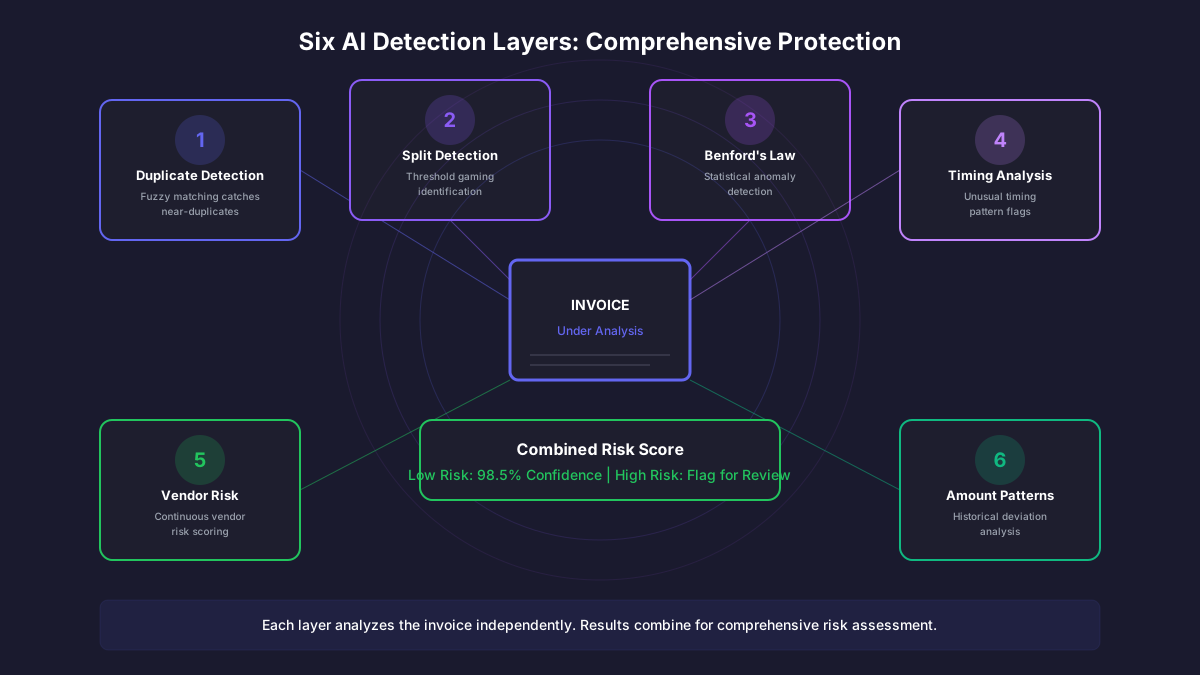
Six AI detection methods create comprehensive fraud protection
Layer 1: Intelligent Duplicate Detection
Traditional duplicate detection looks for exact matches. AI duplicate detection uses fuzzy matching to catch near-duplicates that humans would recognize but rule-based systems miss.
What it catches:
- Invoices with $0.01-$1.00 differences (classic fraud indicator)
- Same vendor, same amount, different invoice numbers
- Invoices with transposed digits or typos vs. legitimate duplicates
- Cross-entity duplicates where the same invoice is submitted to multiple subsidiaries
Layer 2: Split Invoice Detection
This layer specifically targets the threshold gaming that traditional systems miss. AI analyzes invoice patterns to identify when multiple invoices cluster just below approval limits.
What it catches:
- Multiple invoices from same vendor totaling above threshold amounts
- New vendors with multiple same-day or same-week invoices
- Recurring patterns of invoices at specific amounts (e.g., always $4,900 when threshold is $5,000)
- Invoice timing patterns designed to avoid batch detection
Layer 3: Benford's Law Analysis
Benford's Law is one of the most powerful tools in forensic accounting. It states that in naturally occurring datasets, the first digit of numbers follows a predictable distribution: 1 appears about 30% of the time, while 9 appears only about 5%. Fraudulent data often violates this distribution because humans are poor at generating truly random numbers.
What it catches:
- Invoice amounts that deviate from expected statistical distributions
- Fabricated invoices with too many round numbers (a common fraud tell)
- Vendor portfolios where amount patterns change suddenly
- First-digit anomalies that indicate manufactured data
Layer 4: Timing Anomaly Detection
Legitimate business transactions follow predictable timing patterns. Fraudulent activity often occurs at unusual times, exploiting reduced oversight or system vulnerabilities.
What it catches:
- Invoice submissions on weekends, holidays, or outside business hours
- End-of-period rushes that exploit close deadlines
- Invoices submitted during known vacation periods of approvers
- Abnormal velocity changes in invoice submission patterns
Layer 5: Vendor Risk Scoring
Not all vendors carry equal risk. AI continuously updates risk scores based on vendor behavior patterns, data anomalies, and external signals.
What it catches:
- New vendors with limited history receiving large payments
- Bank account changes on established vendors
- Address anomalies (vendor addresses matching employee addresses)
- Vendors with dormant periods followed by sudden activity
Layer 6: Amount Pattern Analysis
This layer analyzes whether invoice amounts fit historical patterns for each vendor and category. Significant deviations trigger investigation.
What it catches:
- Amounts significantly higher than vendor historical average
- Round-number invoices when vendor typically bills specific amounts
- Category spending that deviates from seasonal patterns
- Price increases that exceed market norms
The Power of Layered Detection
Individual detection methods can be gamed by sophisticated fraudsters. Someone who knows about Benford's Law can craft invoices that conform to expected distributions. Someone aware of duplicate detection can ensure each invoice is unique.
But gaming six simultaneous detection methods is exponentially harder. A fraudster might create invoices with perfect first-digit distributions, but those same invoices might cluster below approval thresholds. They might avoid duplicates but submit at unusual times. They might match historical amounts but come from a newly created vendor with address anomalies.
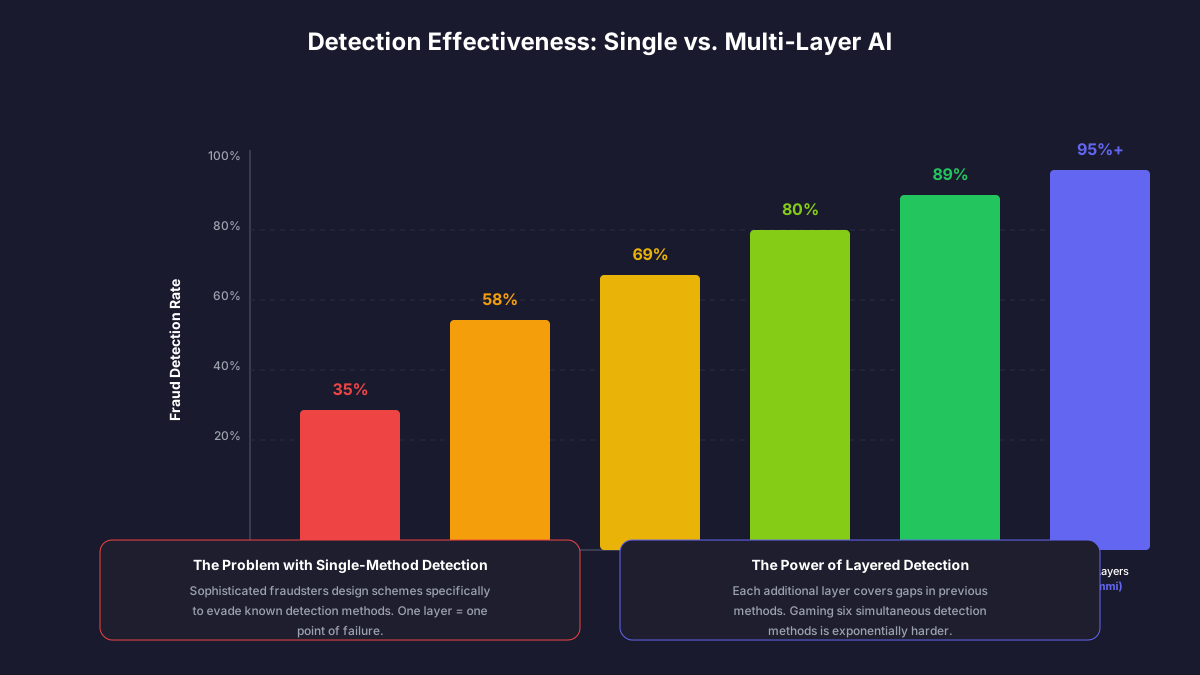
Multi-layer AI detection catches exponentially more fraud than single-method approaches
The Compound Effect
When six detection methods work together, they do not just add their individual effectiveness. They multiply it. A single method might catch 60% of fraud. Six methods working together catch 95%+ because they eliminate the gaps fraudsters exploit.
Real-Time Detection vs. Batch Analysis
Traditional fraud detection often happens in batches, analyzing transactions after the fact during audits or reconciliation. By then, fraudulent payments may have already been made and recovered money is rarely recovered.
AI-powered detection operates in real time. Every invoice is analyzed against all six detection layers the moment it enters the system. High-risk invoices are flagged immediately, before approval, before payment, before any money leaves your organization.
This shift from reactive to proactive detection changes the economics of fraud prevention entirely. Instead of detecting fraud after $847,000 has been paid, you flag the first suspicious invoice and investigate before any payment is made.
The Cost of Delayed Detection
Every month that fraud goes undetected is another month of losses. With the median fraud scheme running 18 months, organizations often lose hundreds of thousands before traditional methods catch up. Real-time AI detection reduces this window to hours or days.
Implementing AI Fraud Detection: What to Expect
Adopting AI-powered fraud detection does not require replacing your entire AP system. Modern solutions integrate with existing ERP systems and AP workflows, adding a detection layer without disrupting established processes.
The implementation journey typically follows this pattern:
- Week 1-2: Historical Analysis AI analyzes your historical invoice data to establish baseline patterns for vendors, amounts, timing, and approval workflows.
- Week 3-4: Model Calibration Detection thresholds are calibrated to your risk tolerance. More aggressive settings catch more fraud but generate more alerts; conservative settings reduce false positives.
- Month 2: Shadow Mode AI runs alongside existing processes, flagging suspicious invoices without blocking them. This validates detection accuracy before full deployment.
- Month 3+: Full Production AI fraud detection operates in real time, with continuous learning improving accuracy based on investigation outcomes.
The Future of AP Security
As AI detection capabilities advance, fraudsters will adapt. The advantage of machine learning systems is that they adapt too, continuously learning from new fraud patterns and adjusting detection models.
The organizations that adopt AI-powered fraud detection now gain a compounding advantage. Every flagged invoice, every investigated anomaly, every confirmed fraud case makes the AI more effective. Early adopters build detection capabilities that late adopters will struggle to match.
The Bottom Line
AP fraud is not a matter of if, but when. Traditional detection methods provide a false sense of security, catching obvious duplicates while sophisticated schemes operate undetected for months or years.
AI-powered fraud detection represents a fundamental upgrade in AP security. Six detection layers working together, operating in real time, continuously learning from your data. The result is fraud detection that actually works against modern threats.
The question every finance leader should ask: can you afford another 18 months of undetected fraud?
Ryan Shugars
Director of Product
Ryan has spent 15 years as a Systems Architect, building enterprise solutions that transform how organizations manage their financial operations.