AP Audit Preparation: Building Audit-Ready Processes That Pass Every Review
Whether facing internal reviews, external financial audits, or SOX compliance examinations, your accounts payable department needs bulletproof processes and documentation. Here's how to build an audit-ready AP function that inspires confidence from auditors and executives alike.
Ryan Shugars
Director of Product
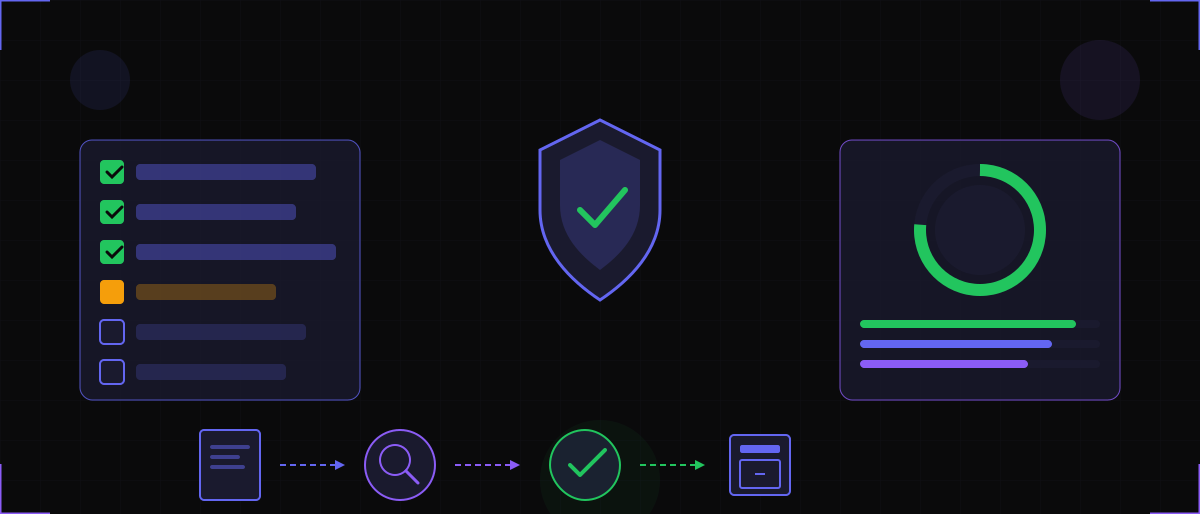
According to the Association of Certified Fraud Examiners, organizations lose an average of 5% of revenue to fraud annually, with accounts payable being one of the most vulnerable departments. The 2023 Global Fraud Study found that billing schemes and expense reimbursement fraud account for nearly 40% of all asset misappropriation cases. Your audit readiness isn't just about passing reviews—it's about protecting your organization's financial integrity.
Yet for many AP teams, audit season induces panic. Scrambling to locate documentation, recreating approval trails, and explaining control gaps consumes weeks of productivity. The solution isn't to work harder during audits—it's to build processes that generate audit evidence as a natural byproduct of daily operations.
Understanding the AP Audit Landscape
Before diving into preparation strategies, it's essential to understand what auditors are actually looking for. AP audits typically examine three core areas: the accuracy of financial reporting, the effectiveness of internal controls, and compliance with regulatory requirements.
What Auditors Examine in AP
- - Invoice-to-payment matching
- - GL coding accuracy
- - Accrual completeness
- - Cut-off procedures
- - Segregation of duties
- - Authorization limits
- - Vendor master changes
- - Exception handling
- - 1099 reporting accuracy
- - Sales/use tax compliance
- - Policy adherence
- - Regulatory requirements
- - Duplicate payment detection
- - Vendor verification
- - Bank change controls
- - Ghost vendor identification
Different audit types have varying focus areas. Internal audits often concentrate on operational efficiency and policy compliance. External financial audits emphasize account balances and transaction accuracy. SOX audits specifically test the design and operating effectiveness of key controls over financial reporting.
Building Your Internal Control Framework
Strong internal controls are the foundation of audit readiness. The COSO Internal Control Framework provides a widely accepted structure for designing and evaluating controls across five components: Control Environment, Risk Assessment, Control Activities, Information and Communication, and Monitoring Activities.
For AP departments, this translates into specific control activities that address the risks inherent in processing vendor payments.
Segregation of Duties
The most fundamental AP control is ensuring no single individual can initiate, approve, and execute a payment. Segregation of duties creates natural checkpoints that prevent both errors and fraud. In smaller organizations where full segregation isn't practical, compensating controls like detailed management review become essential.
Segregation of Duties Matrix
Vendor Master Maintenance
Adding/modifying vendor records
Cannot process invoices
Invoice Processing
Data entry and coding
Cannot approve payments
Payment Approval
Authorizing disbursements
Cannot release payments
Payment Execution
Releasing funds to vendors
Cannot modify vendor banking
Authorization Controls
Every payment should have documented authorization that matches the nature and amount of the expenditure. This means establishing clear approval hierarchies based on spend amount, category, and department. Without proper authorization controls, organizations risk both fraudulent payments and legitimate expenses that bypass budget oversight.
Effective authorization controls include:
- Tiered approval limits based on transaction amount
- Category-specific approvers for specialized spend (capital, travel, etc.)
- Budget owner validation before GL posting
- Exception escalation for out-of-policy transactions
- Dual approval for high-value or sensitive payments
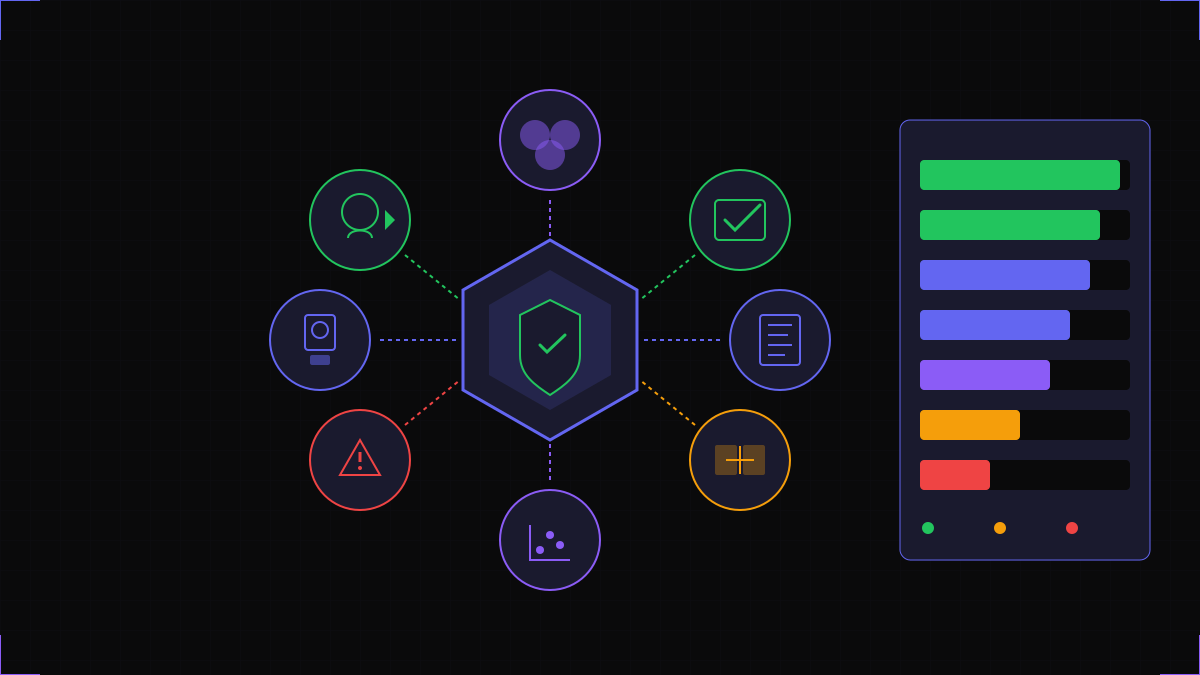
A comprehensive internal control framework addresses segregation of duties, authorization, and documentation requirements
Documentation: The Heart of Audit Readiness
If you can't prove it happened, it didn't happen—at least from an audit perspective. Documentation serves as the evidence that controls exist and operate effectively. The challenge is creating documentation practices that capture necessary evidence without creating excessive administrative burden.
The Three-Way Match Documentation
The three-way match between purchase order, receiving document, and invoice remains the gold standard for AP documentation. When all three documents align, you have strong evidence that:
- The purchase was properly authorized (PO)
- Goods or services were actually received (receiving document)
- The vendor's charges match what was ordered and received (invoice)
For non-PO invoices, equivalent documentation might include contracts, statements of work, approved expense reports, or management approval emails. The key is maintaining a clear link between the payment and its authorization.
Essential Documentation Checklist
- - Original invoice or electronic equivalent
- - Purchase order or contract reference
- - Receiving confirmation or service acceptance
- - Approval workflow history with timestamps
- - GL coding and cost center allocation
- - Payment confirmation and remittance details
Maintaining the Audit Trail
An audit trail is the chronological record of all activities related to a transaction. It should answer the fundamental questions: Who did what, when did they do it, and why? Modern AP systems capture this automatically, but organizations using manual processes need deliberate practices to maintain trail integrity.
Critical audit trail elements include:
- User identification: Every action linked to a specific individual
- Timestamps: Date and time of each activity
- Action description: What was done (created, modified, approved, etc.)
- Before/after values: For any modifications
- System-generated: Cannot be altered by users
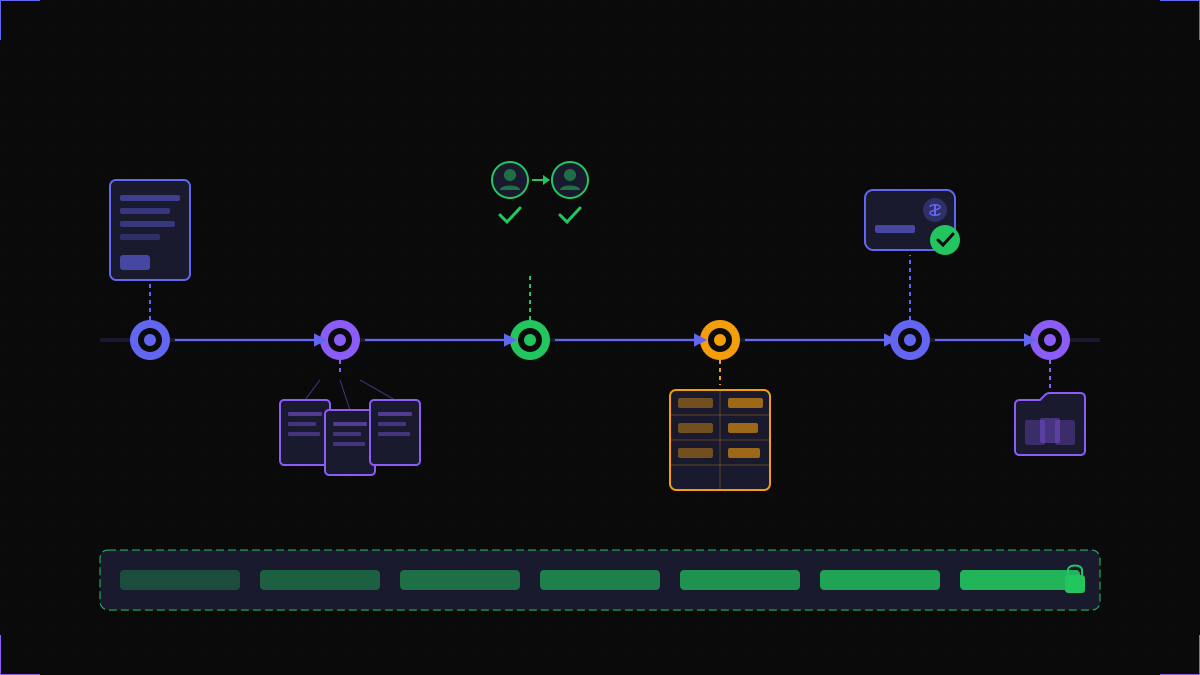
Complete documentation trails capture every step from invoice receipt through payment and archival
SOX Compliance for AP
For public companies, Sarbanes-Oxley (SOX) Section 404 requires management to assess and report on the effectiveness of internal controls over financial reporting. AP processes are inevitably in scope because they affect accounts payable balances, expense recognition, and cash disbursements.
Key Controls Under SOX
SOX audits focus on controls that could materially misstate financial statements. In AP, this typically includes:
SOX Key Controls in AP
Invoice Processing Controls
Three-way match validation, duplicate invoice detection, and proper period cut-off procedures to ensure expenses are recorded in the correct period.
Vendor Master Controls
Segregation of vendor maintenance from payment processing, approval requirements for new vendors and changes, and periodic vendor master reviews.
Payment Authorization Controls
Approval hierarchies enforced by system, payment batch review before release, and reconciliation of payment files to AP records.
Access Controls
Role-based system access, periodic access reviews, and immediate revocation for terminated employees or role changes.
Testing and Documentation Requirements
SOX requires both design effectiveness (the control is properly designed to prevent or detect misstatements) and operating effectiveness (the control actually worked as designed throughout the period). This means auditors will:
- Review control documentation and process narratives
- Test a sample of transactions to verify controls operated
- Evaluate exceptions and remediation actions
- Assess management's monitoring of control effectiveness
Organizations subject to SOX should maintain control matrices documenting each key control, its risk addressed, testing procedures, and results. This documentation should be updated whenever processes change.
Preparing for the Audit
While audit readiness should be a continuous state rather than an event, there are specific preparations that improve audit efficiency and outcomes.
Pre-Audit Self-Assessment
Conduct your own review before auditors arrive. Walk through key controls, test sample transactions, and identify any gaps. It's far better to discover issues yourself and remediate them than to have auditors find problems.
Pre-Audit Self-Assessment Checklist
- - Review user access for appropriateness and segregation
- - Test sample of recent transactions for proper documentation
- - Verify vendor master change logs are complete
- - Confirm all exceptions have documented resolution
- - Reconcile AP sub-ledger to general ledger
- - Review accruals and cut-off procedures
- - Update process documentation for any changes
Organizing Audit Support
Efficient audits require organized support. Designate a point person for auditor requests, establish secure document sharing, and create a tracking system for open items. Respond to requests promptly and completely—partial responses create follow-up work for everyone.
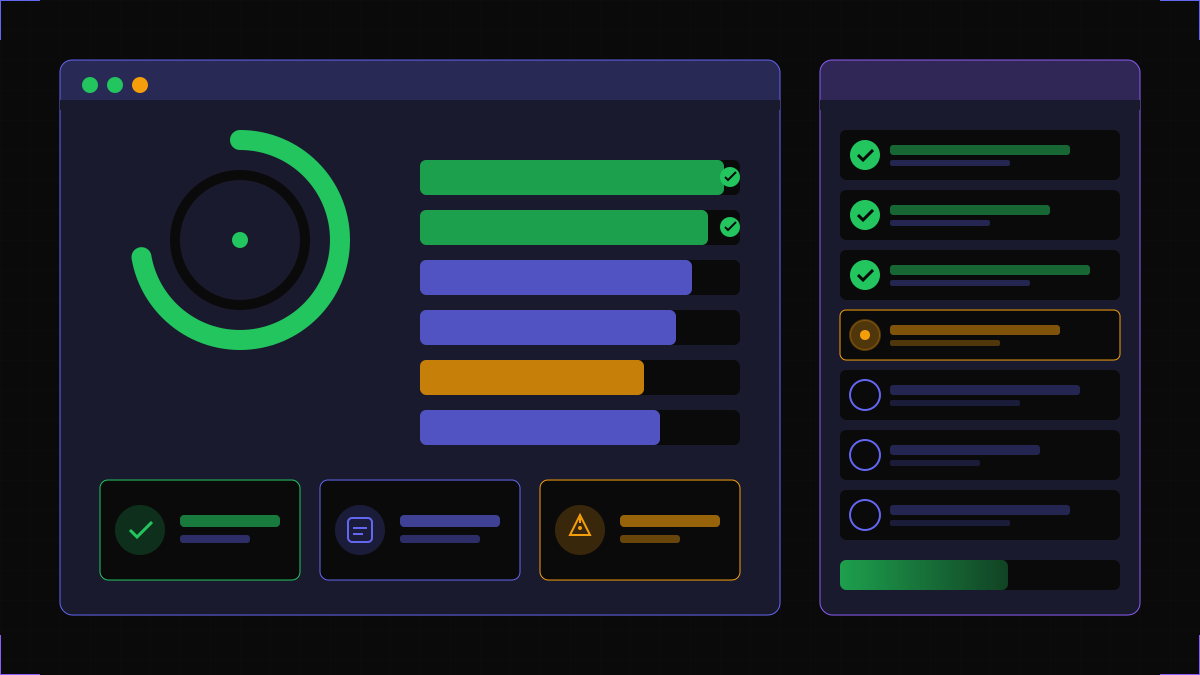
Real-time audit readiness dashboards help AP teams monitor compliance status and address gaps proactively
How Automation Transforms Audit Readiness
Modern AP automation fundamentally changes the audit readiness equation. Instead of manually creating and maintaining documentation, automated systems generate audit evidence as a natural byproduct of processing. This shift has profound implications for both efficiency and control effectiveness.
Built-In Control Enforcement
Automated systems don't forget controls or make exceptions. When approval workflows are configured in the system, every transaction follows them. When segregation of duties is enforced by role assignments, violations become technically impossible rather than just prohibited by policy.
Remmi's AP automation platform enforces controls at the system level:
- Automated three-way matching validates PO, receipt, and invoice alignment
- Configurable approval workflows route transactions based on amount and type
- Role-based access enforces segregation of duties
- Duplicate detection prevents double payments before they occur
- Vendor change controls require verification for banking modifications
Automatic Audit Trail Generation
Every action in an automated AP system is logged with user, timestamp, and action details. This creates a comprehensive, tamper-proof audit trail without any additional effort from the AP team. When auditors request evidence, it's available instantly rather than requiring hours of research.
Automation Impact on Audit Metrics
Audit Preparation Time
Reduction in prep hours
-75%
Documentation Completeness
Transactions with full audit trail
100%
Control Exceptions
Reduction in findings
-90%
Auditor Request Response
Average time to provide documentation
<1 hour
Common Audit Findings and How to Prevent Them
Understanding common audit findings helps you focus prevention efforts. These issues appear repeatedly across AP audits:
- Missing or incomplete documentation: Implement document retention policies and require attachment before payment approval.
- Segregation of duties violations: Review user access quarterly and implement system-enforced role restrictions.
- Unauthorized payments: Configure approval workflows that cannot be bypassed and review exception reports regularly.
- Duplicate payments: Implement automated duplicate detection across invoice number, amount, date, and vendor combinations.
- Vendor master data errors: Require dual approval for vendor changes and conduct periodic master data reviews.
- Cut-off errors: Establish clear period-end procedures and review accruals for completeness.
Building a Culture of Compliance
Sustainable audit readiness requires more than processes and systems—it requires a culture where compliance is valued. This starts with leadership commitment and extends through training, communication, and accountability.
Building Compliance Culture
- - Regular training on policies and control requirements
- - Clear escalation paths for exceptions and concerns
- - Recognition for identifying control improvements
- - Transparent communication about audit findings
- - Leadership modeling of compliant behavior
- - Continuous improvement mindset toward controls
Your Audit Readiness Action Plan
Transforming your AP department into an audit-ready operation requires systematic effort. Here's a practical roadmap:
Immediate Actions (This Month)
- - Document current processes and control points
- - Review user access for segregation of duties
- - Establish document retention requirements
- - Create exception tracking and resolution process
Strategic Improvements (Next Quarter)
- - Implement AP automation with built-in controls
- - Establish monthly control self-assessments
- - Create audit readiness dashboard
- - Develop training program for control awareness
The Bottom Line
Audit readiness isn't a destination—it's an ongoing operational discipline. Organizations that embed compliance into their daily processes experience smoother audits, fewer findings, and stronger financial controls. More importantly, they protect themselves against the fraud and errors that audits are designed to detect.
The investment in building audit-ready AP processes pays dividends beyond audit season. Better controls mean fewer errors, faster processing, and stronger vendor relationships. Complete documentation enables better analytics and decision-making. And the confidence that comes from knowing your processes are sound allows your team to focus on adding value rather than firefighting.
Modern AP automation makes world-class audit readiness achievable for organizations of all sizes. The tools exist to build processes that generate audit evidence automatically, enforce controls consistently, and provide real-time visibility into compliance status. The question is whether you're ready to make the investment.
Ryan Shugars
Director of Product
Ryan has spent 15 years as a Systems Architect, building enterprise solutions that transform how organizations manage their financial operations.