3-Way Invoice Matching: How AI Eliminates Manual PO Reconciliation
Every invoice with a purchase order requires verification against both the PO and the receiving document. This seemingly simple process consumes more AP hours than any other task. Here is how AI is transforming 3-way matching from a bottleneck into an automated workflow.
Ryan Shugars
Director of Product
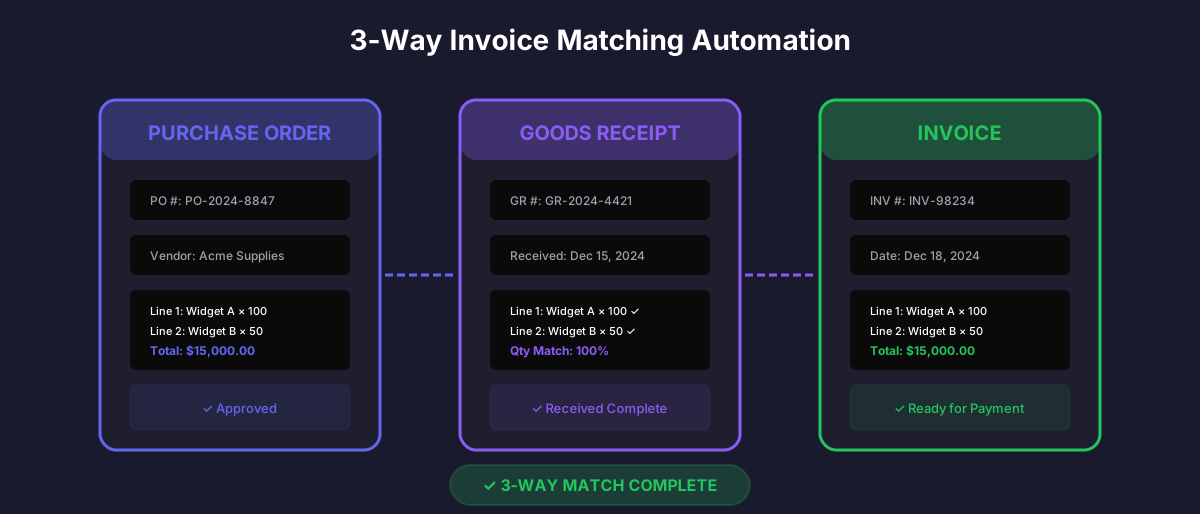
An accounts payable clerk spends an average of 20 minutes on each 3-way match. With 500 PO-based invoices per month, that is 167 hours dedicated solely to comparing three documents and reconciling variances. At $25 per hour fully loaded, the annual cost exceeds $50,000 for a single process.
Yet most organizations still perform this matching manually. The complexity of line-item variances, partial receipts, and unit-of-measure conversions has kept automation out of reach, until now.
Understanding the 3-Way Match Challenge
The concept is straightforward: verify that what was ordered (PO) matches what was received (receipt or goods received note) and what was invoiced. In practice, the variations are endless:
- Quantity variances: Ordered 100 units, received 98, invoiced 100
- Price differences: PO says $10.00, invoice says $10.50
- Partial shipments: One PO, three receipts, two invoices
- Unit conversions: Ordered in cases, received in eaches, invoiced in pallets
- Description mismatches: PO says "Widget A-100," invoice says "Premium Widget Model A100"
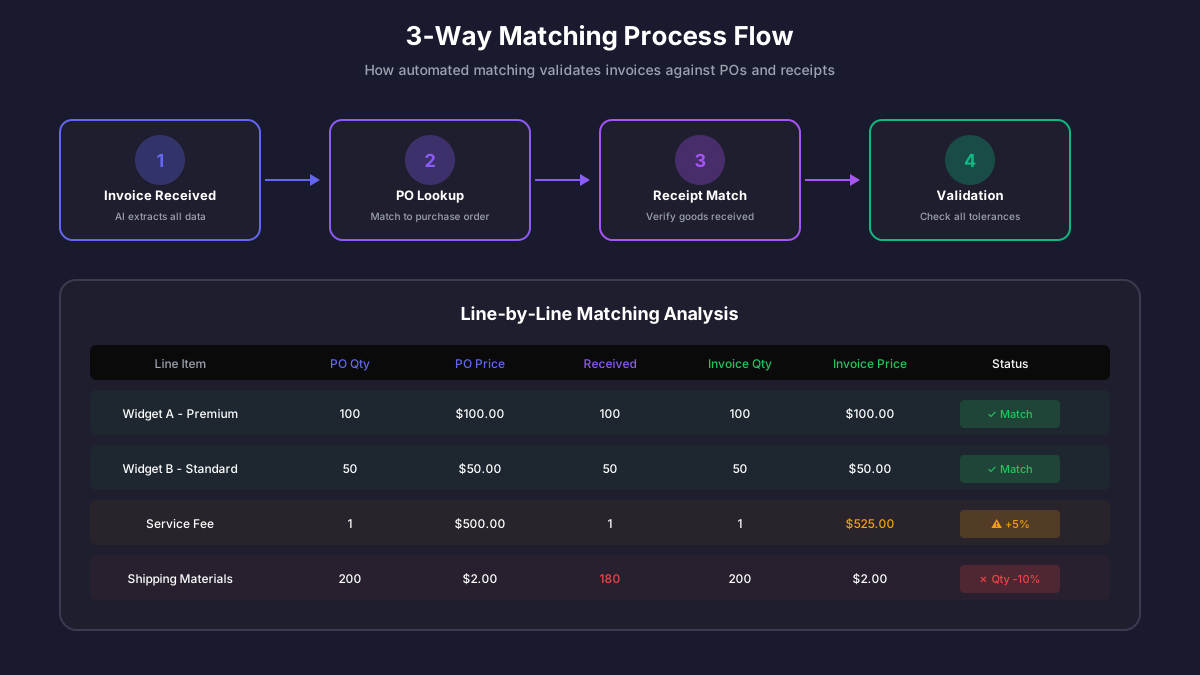
The 3-way matching process: connecting purchase orders, receipts, and invoices
The True Cost of Manual Matching
When we analyze the full cost of manual 3-way matching, the numbers are staggering:
Manual 3-Way Matching: Cost Breakdown
Beyond direct costs, manual matching creates downstream problems: delayed payments damage vendor relationships, missed early payment discounts cost 2% per invoice, and errors lead to duplicate payments or overpayments.
How AI Transforms 3-Way Matching
AI-powered matching fundamentally changes the process. Instead of sequential human review, machine learning models analyze all three documents simultaneously, understanding context and relationships that rule-based systems miss.
Intelligent Document Understanding
Modern AI does not just extract text; it understands document structure. When an invoice references "PO #4521," the system automatically retrieves the matching purchase order and all associated receipts, regardless of how they are filed.
Fuzzy Matching at the Line Level
AI recognizes that "Widget A-100" and "Premium Widget Model A100" are the same item. It understands unit conversions, matches partial quantities, and identifies price tolerances that fall within acceptable ranges.
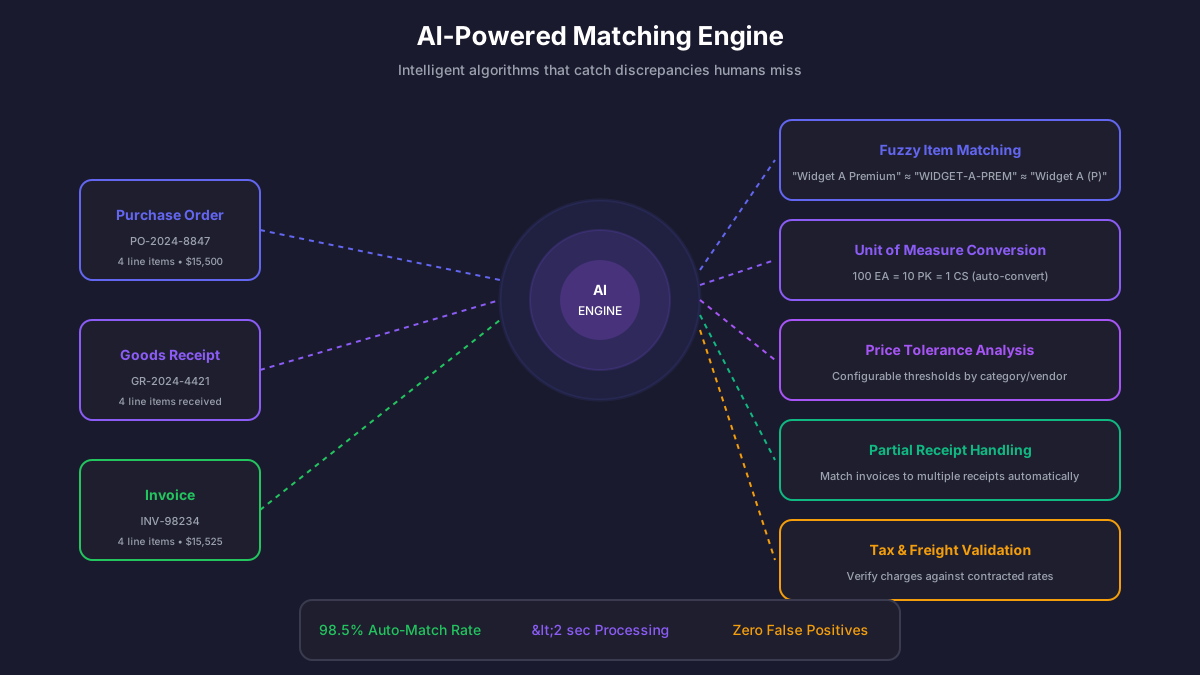
AI matching engine: simultaneous comparison across all document types
Automatic Variance Classification
Not all variances require human attention. AI categorizes discrepancies by type and severity:
Auto-Approved
- Price within tolerance (e.g., +/- 2%)
- Quantity within tolerance
- Known unit conversions
- Expected freight additions
Flagged for Review
- Price exceeds tolerance
- Quantity over-shipped
- No matching receipt
- Unrecognized line items
Real-World Results: The Numbers
Organizations implementing AI-powered 3-way matching consistently report dramatic improvements:
AI Matching Performance Metrics
94%
Auto-match rate on first pass
45 sec
Average processing time
99.2%
Matching accuracy
$1.20
Cost per invoice
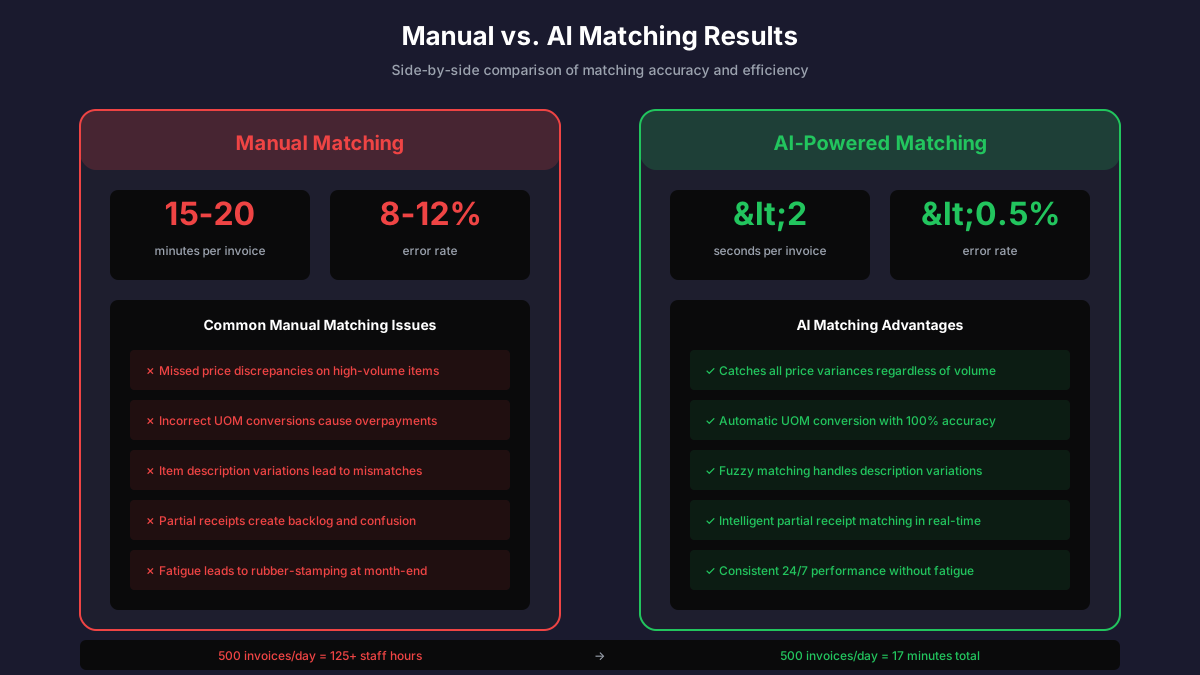
Manual vs. AI matching: time and cost comparison
Implementation: What to Expect
Implementing AI-powered 3-way matching follows a predictable path:
- Week 1-2: Connect invoice sources and ERP system. AI accesses PO and receipt data.
- Week 3-4: Model training on historical matches. The system learns your tolerance rules and vendor patterns.
- Month 2: Parallel processing with human verification. Accuracy validated before full automation.
- Month 3+: Full production. Exception-only human involvement.
The 94% Threshold
Most organizations achieve 94%+ auto-match rates within 90 days. The remaining 6% are true exceptions that require human judgment, but even these are pre-investigated by AI with variance details ready for review.
Beyond Basic Matching: Advanced Capabilities
AI matching capabilities extend beyond simple document comparison:
- Contract compliance: Verify pricing against negotiated contracts
- Blanket PO tracking: Monitor spend against blanket orders
- Multi-currency matching: Handle exchange rate conversions
- Service invoice matching: Match against service agreements and milestones
- Retroactive adjustments: Apply price changes to historical invoices
The Bottom Line
3-way matching does not have to be a manual burden. AI reduces matching costs by 90%, improves accuracy to 99%+, and frees AP staff to focus on strategic vendor relationships instead of document comparison.
The technology exists today. The only question is how long you continue paying $12 per invoice for a process that can cost $1.20.
Ryan Shugars
Director of Product
Ryan has spent 15 years as a Systems Architect, building enterprise solutions that transform how organizations manage their financial operations.