What is Par Level?
The minimum inventory quantity a hotel must maintain to meet guest demand between ordering cycles.
Quick Definition
Par level (also called par stock) is the minimum quantity of a specific inventory item that a hospitality operation needs on hand to meet expected demand until the next delivery arrives. It acts as a safety threshold to prevent stockouts.
- Prevents stockouts that impact guest experience
- Reduces costly emergency rush orders
- Optimizes cash flow and storage costs
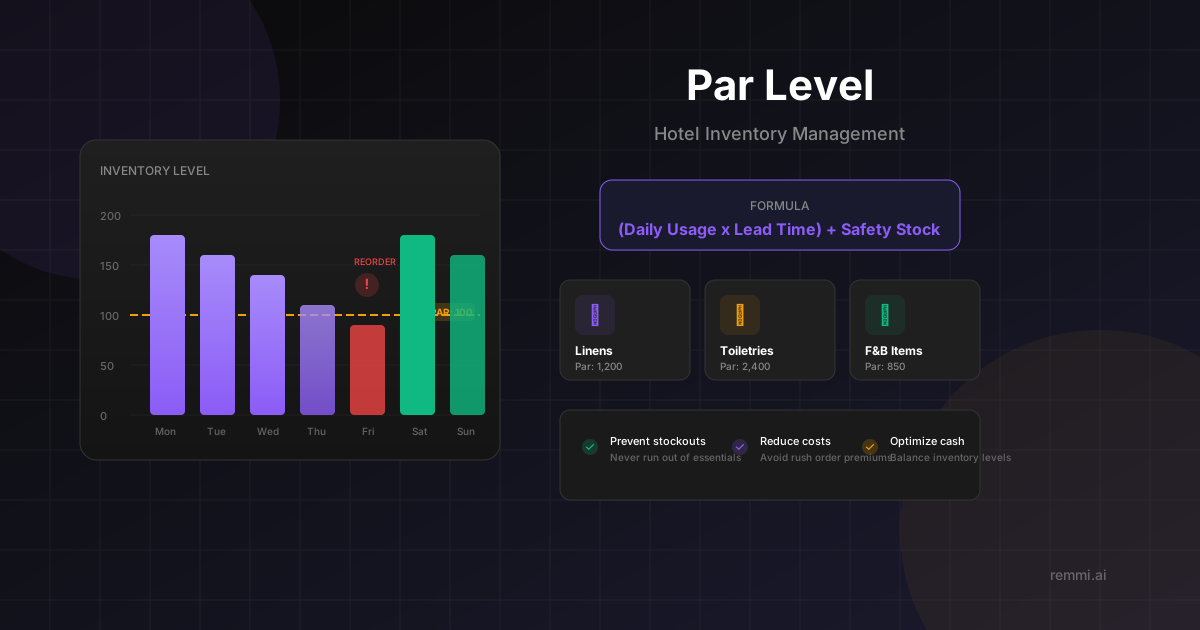
Understanding Par Level in Hospitality
Par level is a foundational concept in hospitality inventory management that determines how much stock to keep on hand for any given item. Whether it's bed linens, bathroom amenities, cleaning supplies, or restaurant ingredients, every item in a hotel operation has an optimal par level that balances service quality against carrying costs.
The term "par" comes from the Latin word meaning "equal" and refers to the standard or baseline quantity. In hospitality, maintaining par means keeping inventory at the minimum level needed to operate smoothly without interruption. When inventory drops to par level, it signals that a new order should be placed.
Hotels typically set par levels for hundreds or thousands of individual SKUs across multiple departments: housekeeping, food and beverage, maintenance, front desk, and spa operations. Each department has unique consumption patterns and lead times that affect how par levels are calculated.
The Par Level Formula
The standard formula for calculating par level is:
Par Level = (Daily Usage x Lead Time) + Safety Stock
For example, a 200-room hotel that uses 400 bath towels per day, has a 2-day vendor lead time, and wants 25% safety stock would calculate: (400 x 2) + 200 = 1,000 towels as the par level. Whenever inventory drops to 1,000 towels, a new order should be triggered.
Key Components of Par Level
Average Daily Usage
The typical quantity consumed per day based on historical data and occupancy patterns. Varies seasonally for most hotels.
Lead Time
Days between placing an order and receiving delivery. Includes vendor processing, shipping, and receiving time.
Safety Stock
Extra buffer inventory to handle unexpected demand spikes or delivery delays. Typically 10-30% of regular stock.
Reorder Point
The inventory level that triggers a new purchase order. Usually set at or just above par level.
Why Par Level Matters in Hospitality
Inventory cost reduction with optimized par levels
Cost premium for emergency rush orders
Typical hotel inventory as % of revenue
Proper par level management directly impacts guest satisfaction, operational efficiency, and the bottom line. Hotels with optimized par levels reduce both stockouts and excess inventory, freeing up cash and storage space while ensuring consistent service quality.
Par Level & Accounts Payable Impact
Par levels have a direct and significant impact on accounts payable operations in hospitality:
- Order Frequency: Par levels determine how often purchase orders are generated, affecting AP workload and vendor invoice volume.
- Invoice Matching: When orders are driven by par levels, receiving quantities should match PO quantities, making three-way matching more reliable.
- Cash Flow Planning: Predictable ordering cycles from par-based purchasing enable better AP cash flow forecasting.
- Vendor Negotiations: Consistent par-level orders support volume discount negotiations and preferred payment terms.
- Budget Accuracy: Par levels tied to occupancy forecasts improve GL coding accuracy and departmental budget tracking.
Par Level Best Practices
Review Par Levels Quarterly
Adjust par levels based on seasonal occupancy changes, menu updates, and vendor lead time variations.
Categorize Items by Criticality
High-impact items (guest-facing) need higher safety stock than back-of-house supplies.
Track Usage Variance
Monitor actual vs. expected usage to identify theft, waste, or changing consumption patterns.
Automate Reorder Triggers
Use inventory management systems to automatically generate POs when stock hits par level.
Balance Cost vs. Risk
Higher par levels reduce stockout risk but increase carrying costs. Find the optimal balance.
Common Par Level Mistakes to Avoid
- xSetting and forgetting — Par levels need regular review as business conditions change
- xIgnoring lead time changes — Vendor delays require par level adjustments
- xOne-size-fits-all approach — Different item categories need different safety stock levels
- xNo seasonal adjustment — Peak season par levels should differ from off-season
Related Terms
Food Cost Percentage
Ratio of food costs to food revenue in hospitality
RevPAR
Revenue per available room metric
Occupancy Rate
Percentage of available rooms occupied
Cost Per Occupied Room
Total operating costs divided by occupied rooms
Inventory Turnover
How quickly inventory is used and replaced
Purchase Order
Document authorizing a vendor purchase