What is Invoice Fraud?
A pervasive financial crime where criminals manipulate the accounts payable process to steal money through fake, altered, or duplicate invoices.
Quick Definition
Invoice fraud occurs when criminals create fake invoices, impersonate legitimate vendors, or manipulate billing information to trick organizations into making unauthorized payments. It costs businesses $26 billion annually in the US alone.
- Average scheme runs 24 months before detection
- Median loss of $100,000 per incident
- Preventable with proper controls and AI detection
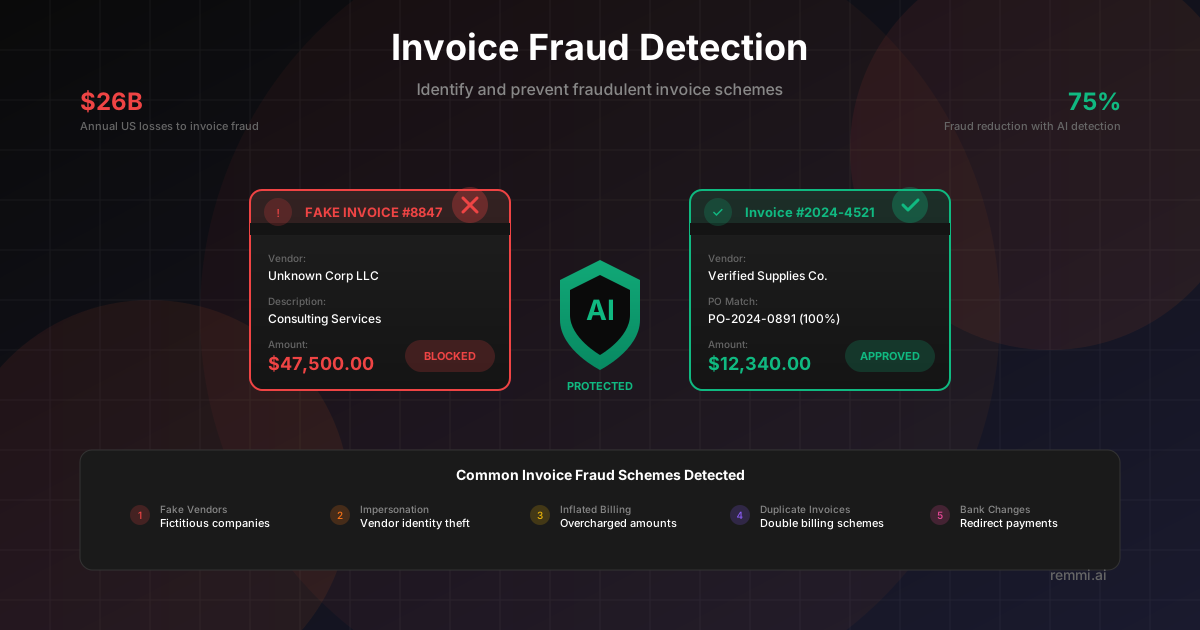
Understanding Invoice Fraud
Invoice fraud is one of the most prevalent forms of business fraud, targeting the accounts payable process where money flows out of organizations. Unlike consumer fraud, invoice fraud specifically exploits business-to-business payment systems, taking advantage of high payment volumes, complex vendor relationships, and sometimes weak internal controls.
The anatomy of invoice fraud is deceptively simple: criminals submit invoices that appear legitimate, and if not detected, the organization processes them just like any other bill. The fraud can range from sophisticated attacks using compromised email accounts to simple schemes involving completely fictional vendors.
What makes invoice fraud particularly dangerous is how it blends in with normal business operations. An accounts payable team processing hundreds or thousands of invoices monthly may not notice that one vendor's bank details have changed, or that an invoice for "consulting services" references a purchase order that was never created.
How Invoice Fraud Works
Invoice fraud schemes typically follow a pattern: gaining access or information, creating a convincing invoice, submitting it through normal channels, and collecting payment before detection. Fraudsters often research their targets extensively, learning vendor names, invoice formats, payment schedules, and approval thresholds to maximize their chances of success.
Common Types of Invoice Fraud
Fake Vendor Invoices
Criminals create entirely fictitious companies and submit invoices for goods or services never provided, hoping they slip through without verification.
Vendor Impersonation
Fraudsters pose as legitimate vendors and request payment to new bank accounts, often using compromised email addresses or lookalike domains.
Inflated Billing
Real vendors intentionally overbill for products or services, adding extra quantities, inflating hours, or charging premium rates for standard work.
Internal Employee Fraud
Employees create shell companies, submit fake invoices, and approve payments to themselves, exploiting their knowledge of internal processes.
Warning Signs of Invoice Fraud
Unfamiliar or new vendors
Invoices from companies you don't recognize
Changed bank details
Requests to update payment information
Urgency or pressure
"Pay immediately" or late fee threats
Just under approval thresholds
Amounts designed to avoid extra scrutiny
Missing PO references
No purchase order or contract mentioned
Round number amounts
Suspiciously even dollar amounts
The Cost of Invoice Fraud
Annual losses in the US alone
Average time before detection
Median loss per incident
Beyond direct financial losses, invoice fraud damages vendor relationships, consumes staff time for investigation and recovery, can lead to audit findings and compliance issues, and erodes trust in financial controls. Many organizations never recover the full amount lost to invoice fraud schemes.
How to Prevent Invoice Fraud
Implement Three-Way Matching
Require matching between purchase orders, receiving documents, and invoices before authorizing any payment.
Verify New Vendors Independently
Confirm vendor legitimacy through independent research, not contact information provided on invoices.
Call to Verify Bank Changes
Always phone-verify requests to update bank details using known contact numbers, never email links.
Deploy AI Fraud Detection
Use machine learning to analyze patterns, detect anomalies, and flag suspicious invoices automatically.
Enforce Segregation of Duties
Separate invoice creation, approval, and payment functions across different employees.
Require Dual Approval
Mandate two-person approval for payments above threshold amounts.
Conduct Regular Audits
Periodically review vendor master files, payment patterns, and exception reports for anomalies.
Invoice Fraud Prevention Best Practices
Verify Before You Pay
Never process an invoice without confirming the vendor, goods/services received, and payment details are legitimate.
Secure Your Vendor Master
Restrict access to vendor records and require documented approval for any changes to bank details.
Train Your AP Team
Regular fraud awareness training helps staff recognize red flags and report suspicious activity.
Monitor Exception Reports
Review invoices without PO matches, new vendors, and unusual payment patterns weekly.
Establish Callback Procedures
Create formal processes for verifying payment changes via phone using pre-verified numbers.
What to Do If You Discover Invoice Fraud
- 1Stop any pending payments immediately contact your bank to halt or reverse transfers if possible
- 2Preserve all evidence save emails, invoices, and any communication related to the fraud
- 3Report to law enforcement file a report with local police and the FBI's IC3 for cyber-related fraud
- 4Notify affected vendors if their identity was impersonated, they need to alert other customers
- 5Review and strengthen controls conduct a post-incident review to close the gaps that enabled the fraud
Related Topics
Business Email Compromise
Email-based attacks targeting payment processes
Vendor Impersonation
Criminals posing as legitimate suppliers
Duplicate Payment
Paying the same invoice multiple times
Three-Way Matching
Verification control for invoice payments
Internal Controls
Safeguards preventing fraud and errors
Vendor Verification
Confirming vendor legitimacy before payment